Building A Gentle Midlife Movement Routine Checklist For First Time Readers
A practical step-by-step guide to building a gentle midlife movement routine checklist for first-time readers, including preparation, instructions, common issues, tips, and next steps.
Building A Gentle Midlife Movement Routine Checklist For First Time Readers
This guide helps you create a gentle movement routine tailored for midlife bodies. It focuses on safe, sustainable practices that respect your changing strength, flexibility, and recovery needs. By following the step-by-step checklist, you will learn how to start slowly, listen to your body, and build consistency without overdoing it. The routine includes warm-ups, strength, balance, and cool-downs, with practical tips for daily life. You will also find troubleshooting advice and answers to common questions, empowering you to move confidently and comfortably.
Fast Answer
- Begin with 10 minutes of gentle stretching and walking daily, then slowly increase duration and intensity as your body adapts.
- Choose activities you enjoy, like swimming, yoga, or dancing, and always warm up and cool down to prevent injury.
Before You Start
- Clear a small, clutter-free space in your home where you can move freely. You do not need special equipment, but a chair or wall can support balance exercises.
- Wear comfortable clothing that allows easy movement, and supportive, non-slip shoes if you plan to stand or walk. If you prefer barefoot, ensure the floor is safe.
- Keep a water bottle nearby and stay hydrated before, during, and after your routine. Listen to your body and take short breaks if needed.
- Set a regular time for your movement each day, such as after waking or before dinner, to help form a consistent habit that fits your schedule.
Step-by-Step Instructions
Start with a Mindful Warm-Up
Begin every session with a gentle warm-up to prepare your muscles and joints. Spend 3-5 minutes doing slow movements: shoulder rolls, arm circles, neck tilts, and marching in place. Focus on your breath, inhaling deeply through your nose and exhaling through your mouth. This increases blood flow and raises your body temperature, making your tissues more pliable. A warm-up also mentally shifts you into a calm, focused state. Stand tall and pretend you are squeezing a small ball between your shoulder blades to improve posture. Keep the pace unhurried—you should feel slightly warm but not out of breath. This sets the tone for a safe and rewarding session.
Incorporate Strength-Building Exercises
Build functional strength with simple exercises that use your own body weight. Do two sets of eight to ten repetitions of the following: wall push-ups, chair squats, and seated leg lifts. For wall push-ups, stand an arm's length from a wall, place palms on the wall at shoulder height, and slowly bend your elbows to lean in, then push back. For chair squats, stand in front of a sturdy chair, lower your hips as if sitting, pause, then stand up—do not actually sit unless you need to. For leg lifts, hold the back of a chair for balance and lift one leg to the side, then lower slowly. These movements strengthen your core, legs, and arms, which are vital for daily tasks like lifting groceries or playing with grandchildren. Start with one set and add more as you gain confidence. Always move slowly and avoid jerky motions to protect your joints.
Add Balance and Flexibility Work
Balance and flexibility become increasingly important in midlife, so include two or three exercises in your routine. Try standing on one foot while holding a chair for support, working up to 30 seconds on each side. For flexibility, perform a standing hamstring stretch: place your heel on a low step or stool, keep your back straight, and gently lean forward until you feel a mild stretch. Hold for 15 to 30 seconds without bouncing. Another good stretch is the chest opener: clasp your hands behind your back and gently pull your shoulders back. These moves improve your balance, reduce the risk of falls, and keep your muscles long and supple. They also help relieve the stiffness that often comes from sitting at a desk or in a car. Move in and out of each stretch slowly and breathe steadily. If you feel any sharp pain, ease off immediately.
Practice Gentle Cardiovascular Movement
Cardiovascular movement should make you breathe a bit harder but still be able to talk. For 5 to 10 minutes, choose an activity like brisk walking, marching on the spot, or using a stationary bike. Start at a comfortable pace and gradually increase your speed as you feel ready. You can break it into shorter bursts if needed—two minutes of walking and one minute of rest counts. This type of movement strengthens your heart and lungs, helps manage weight, and boosts your mood. It also lowers stress and improves your energy. To check your effort, use the talk test: if you can say a full sentence but not sing, you are at a good intensity. If you are gasping or unable to speak, slow down. Start with five minutes and add one minute each week until you reach fifteen minutes.
Cool Down and Stretch Thoroughly
After the active part of your routine, spend 3 to 5 minutes cooling down to help your body return to rest. Do slow, gentle movements such as walking in place for a minute, then perform static stretches: reach to the sky, touch your toes (bend knees if needed), and do a quad stretch. Hold each stretch for 20 to 30 seconds without bouncing. This helps reduce muscle soreness, improves flexibility over time, and calms your nervous system. It also prevents blood from pooling in your legs, which can cause dizziness. Use this time to reflect on how your body feels and to thank yourself for showing up. A proper cool-down makes your routine feel complete and satisfying. Remember to breathe deeply and relax your jaw and shoulders. This is your moment to unwind and transition back to your day.
Track Your Progress and Adjust
Keep a simple journal or note on your phone to record what you did, how you felt, and any challenges. After each session, jot down one thing that went well and one thing you might adjust. Over a week, check your notes to notice patterns. For example, maybe you feel more energetic on days you stretch, or perhaps a specific exercise causes discomfort. Use this information to modify your routine: if something hurts, reduce the range of motion or skip it and ask a professional for alternatives. If you find a movement too easy, you can increase repetitions or hold a balance pose longer. This self-tracking helps you stay in tune with your body and keeps your routine effective and safe. Remember to celebrate small victories, like completing five sessions in a row. Adjusting your plan based on your experience ensures long-term success.
Quick Reference
| Situation | Action | Why it helps |
|---|---|---|
| You feel sore the day after exercising. | Do a very gentle stretching session and go for a slow walk. Drink water and rest, but avoid complete inactivity. | Light movement increases blood flow, which helps deliver nutrients to your muscles and removes waste products, easing soreness. |
| You feel dizzy or lightheaded during a movement. | Immediately sit down or lie down, lower your head between your knees, and breathe slowly until the feeling passes. | Dizziness can indicate a sudden drop in blood pressure or overexertion; sitting down prevents falls and helps your body recover. |
| A habit of skipping sessions due to busy days. | Plan a shorter 5-minute routine on busy days, like walking around the block or doing a few stretches. | Keeping a small habit on busy days prevents you from losing momentum and makes it easier to resume your full routine later. |
Common Issues
- You experience knee pain during squats or lunges.: Avoid deep squats and lunges temporarily. Instead, do sit-to-stand from a chair, keeping your knees aligned with your toes. Consult a physical therapist if pain persists.
- You feel too tired or unmotivated to exercise.: Break your routine into two shorter sessions of 10 minutes each, and choose an activity you enjoy, like dancing or gardening. Start with a warm-up and see if your energy lifts.
- You notice tightness in your hips or lower back after sitting.: Incorporate hip flexor stretches and gentle lower-back twists into your cool-down. Walk around and stretch every hour if you sit for long periods.
Advanced Tips
- For extra challenge, try adding a resistance band to your strength exercises, focusing on slow, controlled movements.
- Join a local walking group or an online movement class to stay motivated and accountable with others.
- Practice mindful movement by focusing on the sensation in your body with each exercise, which improves body awareness and reduces injury risk.
Final Checklist
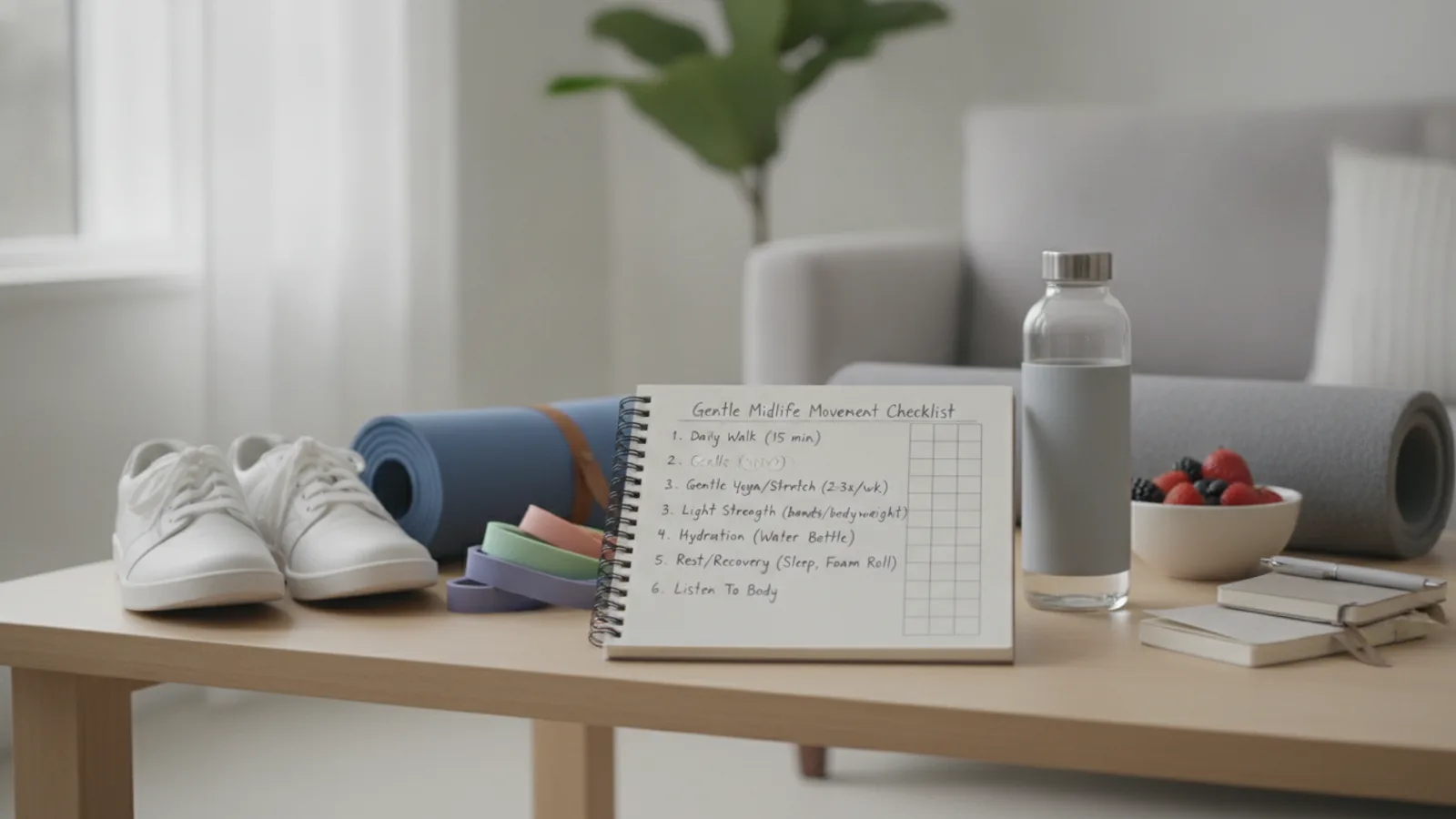
- Warm up for 3-5 minutes with gentle, flowing movements.
- Perform 2 sets of 8-10 strength exercises like wall push-ups and chair squats.
- Include balance work such as standing on one foot for 30 seconds per side.
- Complete a 5-10 minute cardiovascular session, followed by a cool-down stretch.
FAQ
How often should I do this routine?
Start with 2-3 times per week, with a rest day in between, to allow your muscles to recover. As you get comfortable, aim for 4-5 days per week. Listen to your body and ensure you have at least one full rest day each week.
What if I have a chronic condition like arthritis?
It's important to talk with your doctor before starting, but gentle movement often helps with arthritis. Focus on low-impact activities like swimming or chair exercises, and avoid exercises that cause sharp pain. Modify as needed, and start with very short sessions.
Can I do this routine if I've been inactive for years?
Absolutely. This routine is designed for beginners. Start with just one or two steps, like warm-up and walking, and gradually add more. Always go at your own pace and prioritize consistency over intensity.