A Simple Hydration Habit For Busy Working Days Checklist For First Time Readers
A practical step-by-step guide to a simple hydration habit for busy working days checklist for first-time readers, including preparation, instructions, common issues, tips, and next steps.
A Simple Hydration Habit For Busy Working Days Checklist For First Time Readers
This guide provides a simple, practical hydration habit tailored for busy working days, designed for first-time readers who want to build a sustainable routine without overcomplicating it. Learn how to set up a water bottle system, use time-based triggers, and integrate hydration into your workflow with minimal fuss.
Fast Answer
- Keep a large, reusable water bottle on your desk at all times, aiming to finish it by lunchtime and refill for the afternoon.
- Set three smartphone alarms as reminders to take a few sips, focusing on before meal times and mid-morning/afternoon breaks.
Before You Start
- Obtain a reusable water bottle that holds at least 700 ml, so you can track your intake without needing constant refills.
- Place the bottle in a visible, easily reachable spot on your desk, such as in front of your keyboard, to serve as a constant visual cue.
- Mark your bottle with time-based labels (e.g., '9 AM', '12 PM', '3 PM') if possible, or simply use a mental schedule for when to finish each section.
- Choose a specific hydration rule that fits your day, like drinking a full glass after each bathroom break or before starting any new task.
Step-by-Step Instructions
Fill Your Bottle at the Start of Your Day
Begin by filling your reusable water bottle with fresh, cool water before you start work. This simple action creates a visual commitment for the day and ensures you have water within arm's reach during your busy schedule. If your bottle has a capacity of about 700 ml, that is a reasonable starting point for the morning. As you fill, note the current time or the time you plan to start working, as this will anchor your first hydration target. Place the bottle in your designated spot on your desk, preferbly in front of you so you cannot miss it. This step is crucial because it eliminates the need to get up and fetch water later, when you might be tempted to skip it due to work pressure. Having water already available reduces friction and makes the habit more likely to stick. Taking a few moments to fill the bottle also serves as a mindfulness break, intentionally signaling to your brain that you are now entering focused work mode with hydration as a priority.
Set Three Hydration Reminder Alarms
Use a smartphone or watch to set three alarms spaced across your workday: one mid-morning, one just before lunch, and one mid-afternoon. Choose convenient times that align with your typical schedule, such as 10 AM, 12 PM, and 3 PM, but adjust them to your actual breaks. When each alarm goes off, immediately take a few sips from your bottle, even if you are not thirsty yet. The goal is to establish a consistent pattern that triggers the action automatically, breaking long periods of inattention. These alarms serve as external cues that prompt you to pause for just a few seconds, which is all it takes to hydrate. Over time, you will begin to associate these times with drinking water without needing the alarm. This method works because it leverages the power of habit formation through repetition and routine, transforming hydration from an afterthought into a scheduled part of your day.
Finish Half Your Bottle by Lunchtime
Aim to drink at least half of your bottle's contents before you start your lunch break. This ensures you are already a portion of the way toward your daily hydration target, preventing a last-minute scramble. If your bottle holds 700 ml, you should have consumed about 350 ml by noon. Track your progress by checking the water level against the markings if you have them, or simply estimate by the bottle's weight and volume. If you find you are falling behind, take extra sips during the morning to catch up, rather than waiting for lunchtime. This step is important because it spreads your intake evenly throughout the day, which helps maintain energy levels and focus without overwhelming your system. By making this a requirement, you establish a clear benchmark for success. Additionally, having a specific target makes the habit measurable, so you can adjust your approach if you are repeatedly missing the goal.
Refill Your Bottle After Lunch
After you finish your meal, fill your bottle with water again to replace what you drank. This step ensures you have a fresh supply for the afternoon and resets your visual reminder. Use the same fill-up routine as the morning: go to the water cooler or tap, rinse if needed, and fill to the top. If your afternoon is busy, you could refill right after eating while you are still at a common area, rather than waiting until you are back at your desk. This action is crucial because it prevents you from running dry later when you are deep in tasks and inclined to ignore your thirst. It also gives you a quick opportunity to stretch your legs and take a mini mental break, which can be beneficial for productivity. By making refilling a non-negotiable part of your post-lunch routine, you keep hydration convenient, so there's no excuse to skip it.
Drink Sips with Every Email or Task Completion
Integrate sips into your existing workflow by taking one or two sips of water whenever you finish an email, close a meeting, or complete a small task. This psychological linking uses the natural pause in your activities as a trigger. For example, after hitting 'send' on a message, reach for your bottle and take a sip. The beauty of this method is that it doesn't require extra time; it piggybacks on tasks you already do. As you go through your day, these sips add up, gradually increasing your intake without you noticing. This approach works because it capitalizes on the brain's reward system: you complete a task, and you immediately reward yourself with a sip, reinforcing both the productivity and the hydration habit. Over time, this becomes so automatic that you may not even remember making a conscious decision to drink, but your body stays hydrated.
End Your Day with a Final Hydration Check
About 30 minutes before you finish work, look at your bottle and decide if you need to finish the remaining water. If there is any left, drink it now, even if it means a few extra gulps. This final check ensures you meet your daily hydration target before you leave the office or switch to evening routines. If you consistently have more than a quarter bottle left, consider increasing your daytime intake or scheduling an extra alarm. By doing this check, you also create a clear end-of-day ritual that signals the completion of your hydration goal, giving you a sense of accomplishment. This is important because it prevents you from going home with unfinished water and sets a positive precedent for the next day. Moreover, finishing the day's water helps you recognize that his habit is attainable and not burdensome, reinforcing your motivation to continue.
Quick Reference
| Situation | Action | Why it helps |
|---|---|---|
| You are in back-to-back meetings and forget to drink. | Keep a small water bottle in your bag or at your seat, and take a quick sip whenever you enter or exit a meeting room. | This creates a natural opportunity to drink without disrupting your schedule, as you are already moving between locations. |
| You feel tired or have a headache by mid-afternoon. | Stop what you are doing, pour a glass of water, and drink it slowly over the next 10 minutes while taking a brief stretch break. | Dehydration can cause fatigue and headaches, so addressing it promptly may help restore your energy and focus. |
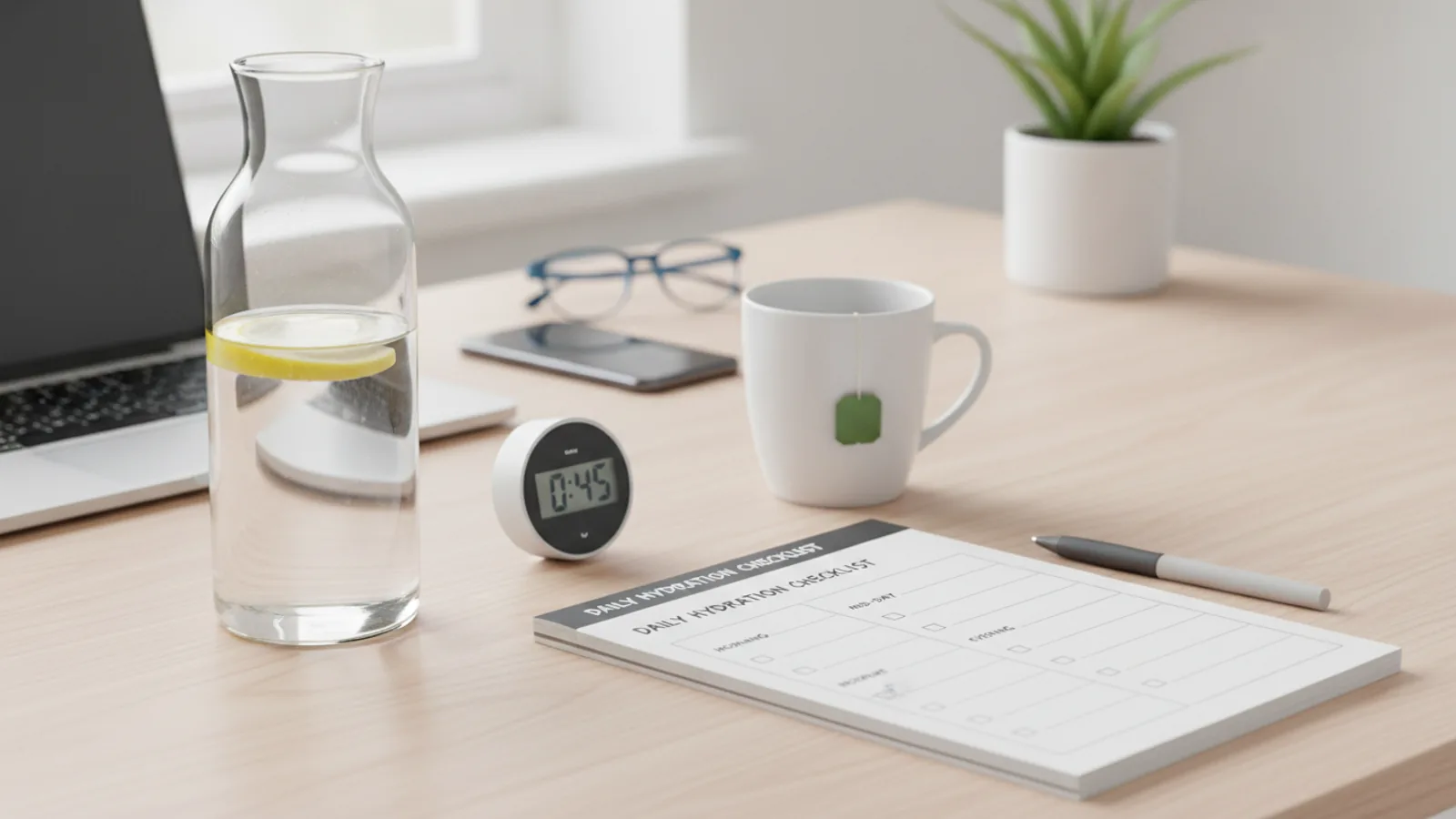
| You are working from home and lose track of time. | Set a timer on your phone or use a water-tracking app to chime every 45 minutes, then take two or three sips each time it rings. | A timer provides an external reminder that compensates for the lack of structured breaks and keeps you on track. |
Common Issues
- You forget to drink because you are too focused on work.: Place a sticky note on your monitor that says 'Sip me!' or move your water bottle in your line of sight. Pair drinking with a frequent task like checking the time or sending an email.
- You dislike the taste of plain water, so you avoid it.: Add a slice of lemon, cucumber, or a few berries to your water to infuse flavor naturally. You can also use a splash of undiluted juice or a sugar-free flavor drop, but verify the label for ingredients.
- You have to pee too often and think it affects your work.: Spread your intake evenly and avoid drinking large amounts at once. Go to the restroom whenever you need, and use that break to stretch. Over time, your body adjusts, and frequent urination usually decreases.
Advanced Tips
- Try a 'hydration wave' routine: drink a few sips every 20 minutes only during your most productive hours, then catch up during natural breaks.
- Use your phone's dedicated water tracking app to log your intake for a week, but rely on your own feeling of thirst as the ultimate guide.
- If you use a desk treadmill or standing desk, keep a separate small glass of water on the armrest so you have easy access without breaking your stride.
Final Checklist
- I have a reusable bottle filled with water on my desk every morning, and I refill it after lunch.
- I have set three alarms to prompt sipping, and I follow through with at least one sip each time.
- I finish at least half my bottle by lunch and drink the rest by end of work, checking frequently.
- I have a backup plan for days when I'm in meetings or traveling, such as carrying a small bottle in my bag.
FAQ
How much water should I drink each day on a busy schedule?
A common guide is to drink about two to three liters of water per day for most adults, but this varies based on your body weight, activity, and climate. Do not stress over precise amounts; instead, aim to drink enough so that you seldom feel thirsty and your urine is light yellow. During work, break this target into smaller portions and sip throughout the day.
Do coffee and tea count toward my water intake?
To a limited extent, yes, beverages with caffeine can contribute to your total fluid intake, but they also have mild diuretic effects. For the purpose of this habit, treat water as your primary source and consider coffee or tea as extras. If you consume caffeinated drinks, try to drink a glass of water for every cup to stay balanced.
What if I just don't feel thirsty during the day?
Your thirst sensation might be blunted if you are very busy or sitting for long hours. That is why this habit uses time-based reminders and visual cues. Even if you do not feel thirsty, taking a few sips periodically is safe and can prevent subtle dehydration. Stop if you feel uncomfortably full or nauseous, and adjust your reminders to be less frequent.