A Cautious Supplement Label Check Before Buying Checklist For First Time Readers
A practical step-by-step guide to a cautious supplement-label check before buying checklist for first-time readers, including preparation, instructions, common issues, tips, and next steps.
A Cautious Supplement Label Check Before Buying Checklist For First Time Readers
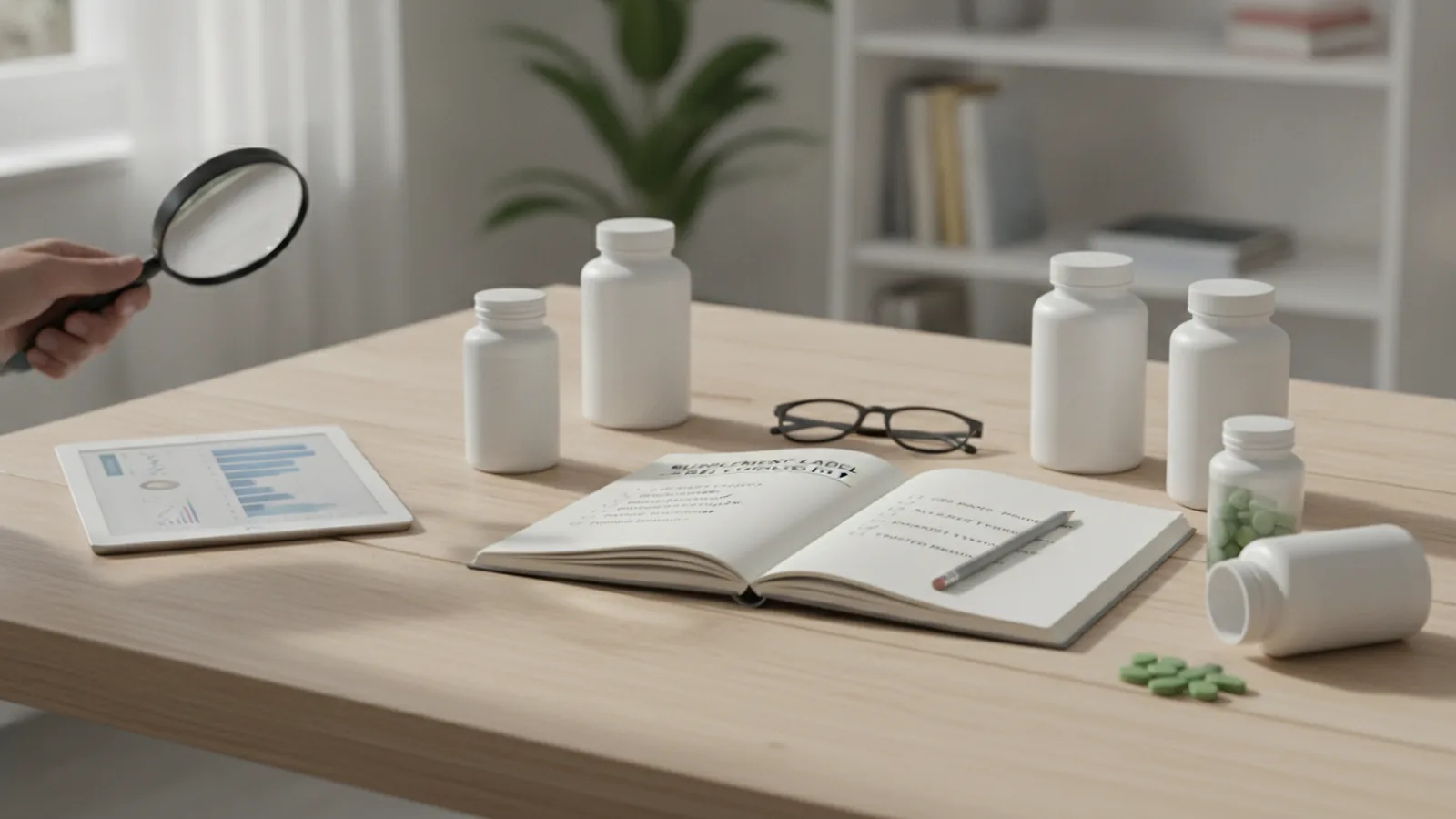
This guide is a cautious supplement-label check before buying checklist for first-time readers. It walks you through a careful, systematic review of supplement facts panels, ingredient lists, and warning sections so you can make an informed purchase. It explains what to look for, why each check matters, and how to avoid common mistakes. Follow each step to verify that a supplement is appropriate for your needs and to reduce the risk of unwanted side effects or interactions. The guide is designed for beginners but includes practical tips that even experienced shoppers may find useful.
Fast Answer
- Before buying any supplement, always read the Supplement Facts panel, check the serving size, and verify that the amount of each ingredient matches what you intend to take.
- Look for a third-party testing seal or certificate of analysis; if you cannot find one, contact the manufacturer directly to ask about their quality testing procedures.
Before You Start
- Have your current medication list ready, including prescription, over-the-counter drugs, and herbal products, because supplement ingredients can interact with them.
- Write down any allergies or food sensitivities you have, as many supplements contain allergens like soy, gluten, or shellfish that may not be obvious.
- Decide what you hope to achieve with the supplement, such as better sleep or joint support, so you can check that the product addresses that goal.
- Set aside ten minutes to do this review without distraction, because a hurried label scan can lead to missing a critical warning or ingredient.
Step-by-Step Instructions
Check the Supplement Facts Panel First
Look for a panel on the back or side of the bottle that says 'Supplement Facts.' This is the legal requirement in many countries and lists the serving size, servings per container, and all nutrients and ingredients. Under each ingredient, you will see the amount per serving. For example, if you are buying vitamin D, you should see how many international units (IU) or micrograms (mcg) are in one serving. This is the most important section because it tells you exactly what is inside and in what quantity. If this panel is missing or hard to read, do not buy the product. Also, check the serving size—sometimes a serving is two capsules, so the amount you actually take may be double what you see on the label. A practical check is to compare this amount to your intended dose. Why this check matters: The panel is your only reliable source for dosage information, and taking too much of certain nutrients can be harmful.
Read the Full Ingredient List
After the Supplement Facts panel, look for the ingredient list. This includes all the other components like fillers, binders, coatings, colors, and natural flavors. Some companies use the term 'proprietary blend' to hide the exact amounts of certain ingredients. This is a warning sign because you cannot know how much of each component you are consuming. For example, if a product has a 'joint health blend' with three ingredients, the label only shows the total weight of the blend, not each individual amount. If you see a proprietary blend, be cautious and ask yourself if you really understand what you are getting. Also, check for allergen statements. Even if you do not have known allergies, a product processed in a facility that handles peanuts can be a risk. A practical check is to look up any ingredient you do not recognize or cannot pronounce. Why this check matters: Hidden ingredients can cause allergic reactions or interact with your medications.
Examine the Warning Section
Most reputable supplement labels have a warning section that includes statements like 'Consult your healthcare provider before use if you are taking medication or have a medical condition.' Some labels also warn about age restrictions, such as 'not for use by minors' or 'not for pregnant women.' Read these carefully because they are there for your safety. For example, a product that contains caffeine might warn against taking it with other stimulants. If you see a warning that you do not fully understand, do not guess—research it or ask a pharmacist. A practical check is to note if the warning mentions any of your current medications or conditions. Why this check matters: The warnings are based on known risks and help you avoid dangerous interactions or side effects.
Verify the Expiration Date and Lot Number
Turn the bottle upside down or look at the bottom for the expiration date and a lot or batch number. The expiration date tells you the date until which the manufacturer guarantees the potency of the product. Do not buy a supplement that is past its expiration date, as the ingredients may have degraded. The lot number is a code that the manufacturer can use to trace the product in case of a recall. If you see a lot number, you can check the manufacturer's website to see if there have been any reported issues with that batch. A practical check is to write down the lot number and expiration date before you buy. This information will be useful if you have a problem later. Why this check matters: Expired products may not have the advertised amount of ingredients, and a lot number helps you verify that the product is genuine and not counterfeit.
Look for Third-Party Testing Seals
Third-party testing means that an independent organization has verified that the product contains what it says, is free from harmful levels of contaminants, and meets certain quality standards. Look for seals or certifications from organizations such as USP, NSF International, or ConsumerLab.com. These seals are usually printed on the label. However, not all legitimate supplements have a seal because the manufacturer may choose not to pay for third-party testing. If you do not see a seal, that does not automatically mean the product is unsafe, but you should look for a statement like 'made in a GMP-certified facility' on the label. GMP stands for Good Manufacturing Practices. A practical check is to visit the certifier's website and enter the product name to confirm the seal is legitimate. Why this check matters: Third-party testing adds an extra layer of assurance that what is on the label is actually in the bottle.
Consult Your Own Health Profile
This final step is about you. Even if a supplement looks perfect on the label, you must consider your own health, including any medications you take, any medical conditions you have, your age, and whether you might be pregnant or breastfeeding. Certain ingredients are not safe for everyone. For example, high doses of vitamin A can cause birth defects, and the herb St. John's Wort interferes with many medications. Schedule a conversation with your doctor or pharmacist about the supplement you intend to buy. Bring the label or a photo of it so they can see the exact ingredients and amounts. A practical check is to ask yourself: 'Have I consulted a professional who knows my health history?' If the answer is no, hold off until you do. Why this check matters: Supplements are not one-size-fits-all, and a professional can help you avoid potentially dangerous interactions.
Quick Reference
| Situation | Action | Why it helps |
|---|---|---|
| You see a 'proprietary blend' in the ingredient list and you are not sure what is inside. | Look up the brand website or customer service number, and ask for the exact amounts of each ingredient in the blend. If they do not disclose it, consider not buying the product. | Proprietary blends can hide how much of a potentially active ingredient you are getting, making it impossible to judge safety and effectiveness. |
| The label has an expiration date, but you are not sure if the product is still good after opening. | Check the label for any 'use by' or 'best by' instructions, and also look for a jar-top or bottle-bottom code that indicates the production date. When in doubt, do not buy it. | A product that has been open for a long time may have lost potency, and age can also increase the risk of contamination or rancidity. |
| You have a gluten allergy, but the label does not say 'gluten-free' anywhere. | Search the manufacturer's website for allergen information or contact them directly to ask about gluten testing. Look for a hidden gluten source like starch or maltodextrin on the ingredient list. | Even if a product is inherently gluten-free, cross-contamination during manufacturing can occur, so you need explicit confirmation. |
Common Issues
- The Supplement Facts panel lists a blend of ingredients without individual amounts, making it hard to know what you are taking.: Avoid such products entirely, or contact the manufacturer to ask if they will provide a breakdown. Consider a different brand that lists each ingredient separately.
- The label contains a warning that mentions interactions with blood thinners, but you are not sure if that applies to you.: Print or write down the warning, then bring it to your doctor or pharmacist. Ask them to confirm whether your current medications or medical conditions put you at risk. Do not take the supplement until you receive a clear answer.
- You cannot find a third-party testing seal anywhere on the bottle.: Search the manufacturer's website for 'certificate of analysis' or 'third-party testing.' If nothing is available, call their customer service. If they cannot provide proof of testing, choose a product from a company that offers independent verification.
Advanced Tips
- Learn how to read the units of measurement on a supplement label—micrograms, milligrams, and international units are not the same, and converting them incorrectly can lead to overdosing.
- Keep a copy of the label or a photo of the product in your health records, so you can easily show your healthcare provider in an emergency and track what supplements you are taking.
- If you are buying online, open the zoomable product photos and enlarge the label to read it clearly. Do not rely only on the product description, because it may omit important details like allergens or warnings.
Final Checklist
- I have read the Supplement Facts panel and know the exact dose of each active ingredient per serving.
- I have checked the full ingredient list, allergens, and any proprietary blends, and I understand what each ingredient is for.
- I have reviewed the warnings and confirmed with my healthcare provider that the supplement is safe for me, considering my medications and conditions.
- I have verified that the product is not expired, has a lot number, and (if possible) has third-party testing certification.
FAQ
What is the difference between a dietary supplement and a food or a drug?
Dietary supplements are taken orally and contain one or more dietary ingredients, such as vitamins, minerals, herbs, amino acids, or enzymes. They are intended to supplement the diet, not to treat or cure diseases. In many regions, they are regulated by food and drug agencies but not subject to the same rigorous pre-market approval as drugs. It is important to read labels carefully and remember that 'natural' does not always mean 'safe.'
How can I tell if a supplement label is trustworthy?
A trustworthy supplement label should clearly list a Supplement Facts panel with the amount of each ingredient per serving, a full ingredient list, a warning section, an expiration date, and the manufacturer or distributor contact information. It should also be legible and not have any torn or covered sections. Look for third-party testing seals and be wary of exaggerated claims like 'miracle cure' or 'works instantly.'
Should I be concerned about supplement contamination or harmful ingredients?
Yes, you should be aware of the risk of contamination or hidden ingredients. Some supplements, especially those sold online or from unknown brands, may contain undeclared drugs or harmful substances. To reduce this risk, buy from reputable brands that perform third-party testing and are transparent about their manufacturing practices. Always read the label for any warnings and do not take more than the recommended dose.