What To Check Before A Simple Hydration Habit For Busy Working Days
A practical step-by-step guide to what to check before a simple hydration habit for busy working days, including preparation, instructions, common issues, tips, and next steps.
What To Check Before A Simple Hydration Habit For Busy Working Days
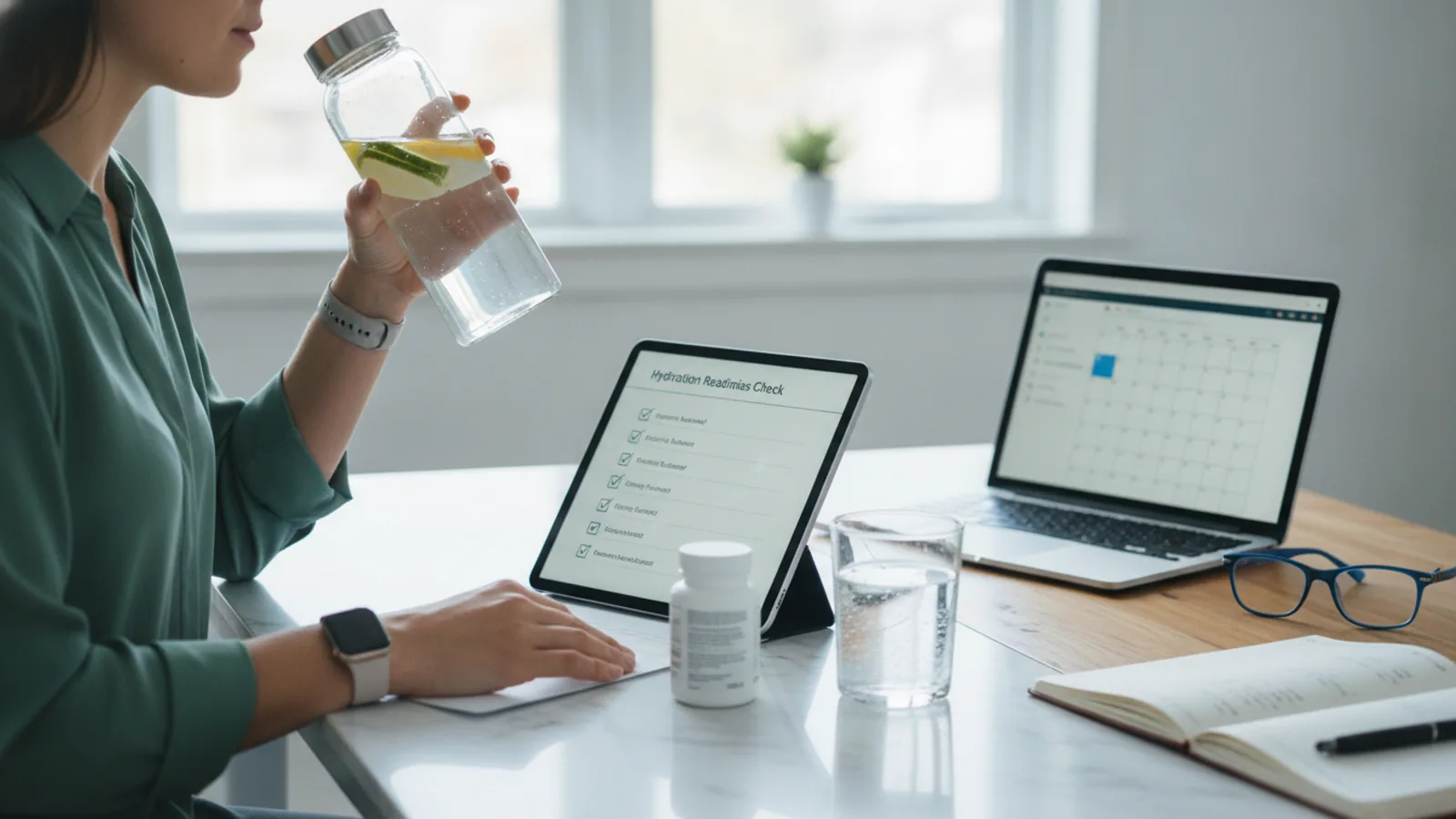
This guide provides a practical, step-by-step approach to building a simple hydration habit during busy working days. It focuses on quick checks and adjustments you can make to your routine, environment, and tools to ensure you stay adequately hydrated without adding stress to your day. By following these steps, you'll learn to assess your current hydration status, prepare your environment for easy access to water, integrate hydration reminders into your workflow, and track your progress effectively.
Fast Answer
- Before starting your hydration habit, check your current water intake by tracking it for one day, and evaluate your environment for easy access to water.
- Ensure your water bottle is clean and filled at the start of your day, and set a simple reminder on your phone or computer to take a sip every hour.
Before You Start
- Get a reusable water bottle with clear markings so you can easily see how much you've drunk during the day.
- Identify a clean, reliable water source near your workspace, such as a sink or a water dispenser that you can access quickly.
- Plan your hydration checkpoints: decide on specific times of day when you will pause and drink water, such as after meetings or at the top of each hour.
- Set up a simple tracking method, like a note on your desk or a free app, to log your daily water intake and help you stay accountable.
Step-by-Step Instructions
Assess Your Current Hydration Status
Start by evaluating how much water you typically drink during a busy workday. For two days, log every glass or bottle of water you consume, along with the time of day. This will give you a baseline and help you identify patterns, such as forgetting to drink during afternoon meetings or when you're deeply focused on a task. You can also check the color of your urine—pale yellow indicates adequate hydration, while dark yellow or amber suggests you need more fluids. Write down your observations in a notebook or a simple digital note. This step is crucial because you cannot improve what you don't measure. By understanding your starting point, you can set realistic goals, such as increasing your intake by a specific number of glasses, and you'll know what adjustments to make later. Remember that your hydration needs can vary based on your body size, activity, and environment, so this baseline is personal to you.
Prepare Your Workspace for Hydration
Place a filled water bottle within arm's reach on your desk before you start working. This simple action removes any barrier to taking a sip, so you don't have to get up or remember to bring water from the kitchen. Choose a bottle with a handy cap or straw that you can use with one hand without breaking your focus. If possible, keep a backup bottle or a pitcher of water nearby to refill from easily. Also, consider the location of your workspace—if you sit in an office, maybe keep a water filter pitcher on a shelf; if you work from home, ensure the water source is accessible. By making water visible and easily accessible, you're more likely to drink more throughout the day. This works because it reduces friction: when something is easy to do, you do it more often. Additionally, a water bottle on your desk serves as a visual reminder to drink, especially if you're engaged in tasks that make you forget the time.
Set Reminders That Align with Your Routine
Integrate hydration reminders into your existing daily schedule, rather than setting random alarms that might be ignored. For example, plan to drink a glass of water after each meeting, before each meal, or at the start of each hour. Use your phone's silent notification feature or a desktop app that pops up a gentle reminder. You can also link hydration to an activity you already do, like sending an email or checking social media. This technique, called habit stacking, pairs a new habit with an established one to increase the likelihood of remembering. Ensure the reminder is specific: instead of 'drink water', say 'take three sips from your bottle now'. Set the reminder to repeat at times that match your work schedule, such as 10:00 AM, 1:00 PM, and 4:00 PM. The reason this works is that it uses your existing cues, reducing the mental effort needed to remember. Over time, you'll associate these cues with drinking water, and eventually, it will become second nature.
Practice the 'Sip, Don't Gulp' Method
When you drink, take small sips throughout the day rather than gulping a large amount at once. Aim for a sip every 15 to 20 minutes, which adds up to about 500 to 700 ml per hour if you are actively sipping. For example, take one sip whenever you check your email or answer a message. This consistent, small intake is easier for your body to absorb and helps maintain a steady level of hydration. It also avoids the uncomfortable feeling of fullness and reduces the need for frequent bathroom breaks that could interrupt your flow. To practice this, keep your bottle in the same spot and take a sip every time you look at it. This method also helps you develop awareness of your drinking habits. The reason this works is that your body can only process a certain amount of water at a time, and distributing intake evenly prevents overloading your kidneys, making the water more effective in keeping you hydrated.
Monitor Your Intake with a Simple Log
Keep a simple log of how many glasses or bottle refills you have each day. You can use a paper chart on your desk, a note in your phone, or a habit-tracking app. At the end of each day, calculate your total and compare it to your goal (often around 8 glasses, but adjust to your needs). Note any days you didn't meet your goal and identify why—maybe you were in long meetings without access to water, or you simply forgot. Use this information to adjust your reminder times or restructure your breaks. For example, if you notice you drink less in the afternoon, schedule a water break after lunch. This monitoring step is crucial because it provides accurate feedback on your behavior, allowing you to make data-driven changes. It also gives a sense of accomplishment when you reach your goal, reinforcing the habit. You don't need complex spreadsheets; just a checkmark on a piece of paper works perfectly.
Adjust for Your Environment and Activity
At the end of each day, briefly assess your hydration based on external factors like the weather, your physical activity, and how much you perspired. If you worked out, went for a walk, or were in a warm environment, you need extra water to compensate. Also, consider your consumption of caffeinated or alcoholic beverages, which can have a diuretic effect. Adjust your goals accordingly: on active days, aim to drink an extra one to two glasses. Pay attention to your body's signals—if you feel tired, have a headache, or notice dry mouth, these can be signs of dehydration. Use this information to fine-tune your habit for the next day. This step ensures that your hydration plan is flexible and personal, not rigid. Over time, you'll become better at anticipating your needs and can plan your water intake before you feel the effects of dehydration. This personalization is key to maintaining a sustainable habit.
Quick Reference
| Situation | Action | Why it helps |
|---|---|---|
| You have back-to-back meetings in the morning and forget to drink. | Place a full water bottle next to your notepad and take one sip at the start and end of every meeting. | This simple action ensures you take a few sips without needing a break, and the visual cue of the bottle reminds you to drink. |
| You tend to drink coffee all afternoon and feel jittery or thirsty. | Replace every second cup of coffee with a glass of water, and keep a water bottle near your coffee machine. | Coffee can dehydrate you, so alternating with water balances fluids and reduces the negative effects of too much caffeine. |
| You finish work and realize you only drank one glass of water all day. | Keep a large water bottle (at least 500 ml) on your desk and set three reminders that align with natural breaks. | A larger bottle visible at all times increases the chance you'll drink, and reminders at breaks help you build a routine without feeling pressured. |
Common Issues
- I forget to drink water because I'm too focused on work.: Link drinking water to a frequent action you already do, like checking your email. Every time you open your inbox, take a sip. This habit pairing makes it easier to remember.
- The water tastes bland and I prefer sweet drinks.: Add natural flavor to your water by infusing it with citrus, berries, or cucumber slices. Prepare this infusion the night before so it's ready in the morning.
- I feel like I'm running to the bathroom too often.: Space out your water intake more evenly instead of gulping large amounts at once. Aim for small sips every 20 minutes. This reduces the sudden need to pee and helps your body absorb water better.
Advanced Tips
- Use a smart water bottle that syncs with a phone app to track your intake and send gentle reminders if you fall behind.
- Experiment with adding electrolyte powder or tablets on especially active days to help your body retain fluids.
- Keep a hydrated snack on hand, such as watermelon, cucumber, or oranges, which can supplement your water intake without extra effort.
Final Checklist
- I have a water bottle that I can see and easily reach from my workspace.
- I have set reminders that are aligned with my work routine, such as after meetings or at specific times.
- I have a simple way to log my daily water intake, like a note or an app.
- I have adjusted my water goals for today's activity level and weather, and I know when to drink more.
FAQ
How much water should I drink in a busy workday?
A common guideline is to drink about 8 glasses (2 liters) per day, but this can vary based on your body size, activity, and climate. To determine your personal need, start by tracking your intake and observing your urine color. Pale yellow is a sign of good hydration, whereas dark yellow means you need more. Listen to your body's signals like thirst and energy levels, and adjust as needed.
What are some signs that I'm dehydrated during work?
Common signs include headache, fatigue, dry mouth, dizziness, and difficulty concentrating. You might also notice that your urine is darker than usual. If you experience any of these, take a break and drink water. To prevent this, set reminders and keep water close by. Over time, you'll recognize your own early signs and can act before they affect your work.
Can I replace water with coffee or tea to stay hydrated?
While coffee and tea count toward your fluid intake, caffeine can act as a mild diuretic, causing you to urinate more. It's best to drink water as your primary source, and limit caffeinated beverages to a few cups a day. To balance, for every caffeinated drink, have a glass of water. Herbal teas are a good caffeine-free alternative that still provides fluid.