How To Plan A Food And Symptom Note For Everyday Digestion
A practical step-by-step guide to how to plan a food-and-symptom note for everyday digestion, including preparation, instructions, common issues, tips, and next steps.
How To Plan A Food And Symptom Note For Everyday Digestion
Tracking your meals and how they affect your digestion can reveal patterns that help you feel better every day. This guide shows you how to create a simple, effective food-and-symptom note—what to record, how to organize it, and how to use the information to make smart choices. You'll learn to spot connections between what you eat and how you feel, and you'll build a personal roadmap for digestive comfort. Start with the right supplies, establish a routine, and use your notes to identify your body's unique triggers and tolerances. Whether you're new to journaling or looking to refine your approach, this practical guide gives you everything you need to make your daily digestion a little easier.
Fast Answer
- Keep a small notebook or a simple digital note on your phone, and write down each meal, snack, and beverage as you consume them, along with the time and portion size.
- After each meal, record any digestive symptoms you experience, rating their severity on a scale of 1 to 10, and also note your stress level, sleep quality, and physical activity for context.
Before You Start
- Choose a dedicated notebook or a note-taking app where you can easily add entries throughout the day. Designate a specific section for food and symptom logs, and keep it accessible at all times.
- Decide on a simple severity scale for symptoms, such as 1 (mild) to 5 (severe), and write down your personal definitions for each level to ensure consistency in your tracking.
- Prepare a list of common digestive symptoms you might experience, such as bloating, gas, heartburn, stomach pain, nausea, or irregular bowel movements. You'll use this list to quickly identify and note symptoms.
- Set a reminder on your phone or calendar to review your notes at the same time each evening. This helps you build a routine and ensures you don't forget to record any late-day symptoms.
Step-by-Step Instructions
Choose Your Recording Tool and Setup
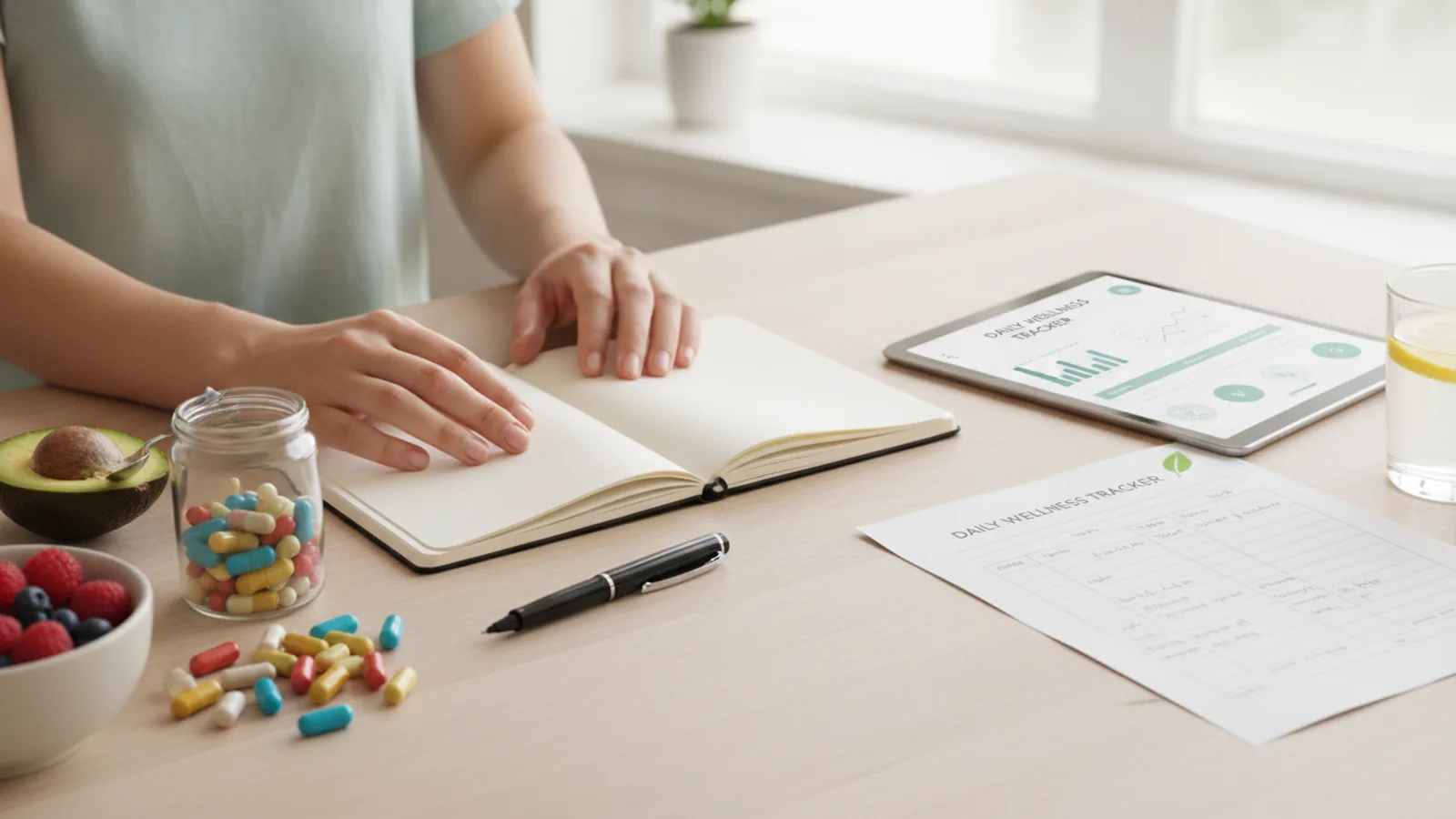
Start by selecting a simple, portable tool for your food-and-symptom note. A pocket-sized notebook or a note-taking app on your phone works well because you can carry it everywhere. If you use a notebook, dedicate the first few pages to a quick-reference table of common symptoms and your severity scale. For an app, create a new note titled 'Daily Digestion Log' and set up a simple template that includes sections for time, food/drink, portion size, symptoms, and notes. This preparation makes it easy to fill in details quickly after meals, so you won't skip entries. Your setup should be convenient enough to use within a minute, because if it's cumbersome, you'll abandon it. A clear, ready-made template also reduces the effort needed to record each item, increasing your likelihood of staying consistent. Remember, the goal is to capture accurate data, so make the process as effortless as possible. You can create a physical card with checkboxes for symptoms to make entries even faster.
Record Your Meals and Snacks Immediately
As soon as you finish eating or drinking, write down exactly what you consumed, including the time and approximate portion size. Use plain language: 'two slices of whole-wheat toast with butter and a glass of orange juice' is better than 'breakfast.' Include all snacks, condiments, and beverages, not just main meals. This real-time recording is essential because memory can distort details later. It also helps you note your hunger level before the meal, which can affect how you feel afterward. For portion size, use familiar measurements like 'a cup of rice' or 'a handful of almonds.' You don't need precise grams, but be consistent. If you're eating out, jot down the dish name and any ingredients you can identify. This level of detail allows you to spot patterns that might otherwise go unnoticed, such as a food that causes discomfort only when eaten in large amounts or combined with another item.
Rate Your Symptom Severity and Type
About 30 to 60 minutes after eating, and again a few hours later, check if you have any digestive symptoms. Use your chosen scale (e.g., 1 to 5) to rate the severity of each symptom you notice. Also note the type, such as bloating, heartburn, or stomach pain. Be specific: 'mild bloating' is less helpful than 'bloating in upper abdomen, 2/5.' If you have multiple symptoms, list them all with their individual ratings. This step helps you connect specific foods to specific reactions. For example, you might notice that dairy causes a 3/5 bloating but no other symptoms. Recording severity is key because it allows you to see patterns over time—a food might not cause immediate pain but could lead to discomfort later. Your notes should be factual, not emotional, so you can analyze them objectively later.
Note External Factors Like Stress and Sleep
In addition to food, your digestion is influenced by other daily factors. After recording your symptoms, take a few seconds to note your current stress level (e.g., 'high', 'medium', 'low'), your sleep quality from the previous night ('good', 'fair', 'poor'), and any physical activity you did (e.g., 'walked 20 minutes' or 'no exercise'). These factors can drastically affect how your body processes food. For instance, eating a heavy meal on a high-stress day might cause more discomfort than the same meal on a relaxed day. By tracking these variables, you'll get a fuller picture of your digestive health. You don't need to be exact, just consistent. This information will be invaluable when you review your notes to find patterns, because it helps you separate the effects of food from other influences.
Review Your Notes Weekly for Patterns
Once a week, set aside ten minutes to review your food and symptom notes. Look for any foods that appear in your log on days when you had symptoms, and consider if there's a pattern. For example, you might notice that every time you eat a particular snack, you feel bloated an hour later. Also check if certain external factors, like poor sleep, coincide with worse symptoms. This weekly review is critical because it turns your raw data into actionable insights. You might spot a food that consistently triggers reactions, or you might discover that your digestion is better when you eat smaller meals more frequently. When you find a likely pattern, don't immediately assume it's a trigger—simply flag it for further observation. Over the next week, you can test it by temporarily changing that food and seeing if your symptoms improve.
Adjust Your Diet Based on Insights
After you've identified a likely food or pattern, make a single change at a time and observe the effects for a few days. For instance, if you suspect that dairy worsens your bloating, try reducing your dairy intake for one week, but keep other foods constant. Record your symptoms as before, and then compare the data. This controlled approach helps you confirm whether it's truly that food causing the issue. Remember to change only one variable at a time so that any change in symptoms can be attributed to that specific alteration. This step is about applying your findings to improve your daily well-being. It's not about following a rigid diet, but about personalizing your nutrition based on evidence. You may find that some foods are fine in moderation, while others are best avoided. Always listen to your body and make gradual adjustments.
Quick Reference
| Situation | Action | Why it helps |
|---|---|---|
| You feel bloated after every lunch for a week | Review your lunch entries for that week and identify common foods. Next day, try a lunch without the most common item, and log your symptoms to see if bloating lessens. | Pinpointing a single common food helps isolate the trigger. By removing it temporarily, you can confirm the cause and then decide how to adjust your lunch choices. |
| You notice your symptoms are worse on days you're stressed | During high-stress days, add a 5-minute deep-breathing break before meals. Also note your stress level in your log to see if symptoms improve with relaxation. | Mindful eating and reducing stress can ease digestion. Tracking stress alongside symptoms helps you understand the role of anxiety in your digestive discomfort. |
| You have a symptom but you're not sure which food caused it | Record the symptom time and list all foods eaten in the previous 4 hours. Review that list to see which foods appear in similar symptom events, and test one at a time. | Digestive reactions often occur hours later, so listing prior foods helps you spot delayed triggers. Testing one food at a time gives clear evidence. |
Common Issues
- Forgetting to log meals right after eating: Set a recurring alarm on your phone for two minutes after your typical mealtimes. Keep your notebook or app open on your desk or on the home screen to make it easier. If you miss a log, write down what you remember as soon as possible and note the delay.
- Recording symptoms as vague descriptions like 'felt bad': Use a specific symptom list with adjectives. For example, write 'sharp pain in lower left side' instead of 'hurt.' Rate each symptom on your scale to give it a concrete number, and note the location and time. This precision is essential for pattern detection.
- Not capturing the full picture because you only log food and symptoms but forget other factors: Create a one-line 'context' slot in each entry. Fill it with quick notes on stress, sleep, and activity. To make it a habit, link it to your symptom check: after rating symptoms, ask yourself 'How did I sleep last night?' and 'How stressed am I now?'
Advanced Tips
- Incorporate the FODMAP elimination concept by systematically removing high-gas foods for a few weeks, but only with professional guidance, noting how your symptoms change and which foods you can reintroduce without issues.
- Use an elimination and rechallenge protocol for a suspected trigger: remove the food for two weeks, then reintroduce it in a controlled manner, recording your reactions each time to build a clear cause-and-effect picture.
- Combine your food and symptom notes with your physical activity log, as moderate exercise often improves digestion; but note if certain exercises increase symptoms, so you can find the best timing and intensity for your body.
Final Checklist
- Have a dedicated notebook or app page set up with a simple template for time, food/drink, portion, symptoms, and context notes.
- Record every meal, snack, and beverage within 30 minutes of consuming, with precise time and portion size.
- Rate each symptom on your 1-to-5 scale, and note the type and location, plus any external factors like stress or sleep.
- Review your notes weekly, look for patterns, and implement one change at a time based on evidence.
FAQ
How long should I keep a food and symptom diary?
For initial pattern detection, keep the diary for at least two to four weeks. This gives you enough data to cover your typical eating habits and any variations in symptoms. If you find a likely trigger, you may continue tracking for another week or two to test changes. Some people prefer to maintain a shorter daily log indefinitely to manage ongoing digestion issues.
What if I have multiple symptoms and I'm not sure which food is causing them?
Don't try to figure out everything at once. Keep recording all data, and after a couple of weeks, look for foods that appear in your log on the same days as any symptom. Focus on the most frequent or bothersome symptom first. Choose one food that appears often on those days, and try eliminating it for a week while continuing to log. Use your notes to compare symptom severity before and after.
Can I use this guide to diagnose a food allergy or intolerance?
This guide can help you identify potential sensitivities, but it cannot diagnose a medical condition. If you suspect a food allergy or a serious intolerance such as celiac disease, it's essential to see a doctor or registered dietitian. They can recommend proper testing and guide you on safe dietary changes. Self-diagnosis can be risky and lead to unnecessary restrictions or missing serious conditions.