How To Choose Building A Gentle Midlife Movement Routine
A practical step-by-step guide to how to choose building a gentle midlife movement routine, including preparation, instructions, common issues, tips, and next steps.
How To Choose Building A Gentle Midlife Movement Routine
This guide helps you create a gentle movement routine for midlife that respects your changing body, builds consistency, and prevents injury. It covers goal setting, preparation, low-impact exercises, progress tracking, and adaptation. Designed for those who want to sustain energy, manage joint stiffness, and improve mood without pushing too hard.
Fast Answer
- Start with a quick self-assessment of your current fitness, any pain, and available time, then set a realistic goal like 15 minutes of walking or stretching daily.
- Follow the 5-step routine: warm-up, mobility, strength (bodyweight or light weights), balance, and cool-down, all at a gentle pace, 3-4 days per week.
Before You Start
- Check with your healthcare provider to ensure you're clear to exercise, especially if you have heart concerns, osteoporosis, or recent surgery.
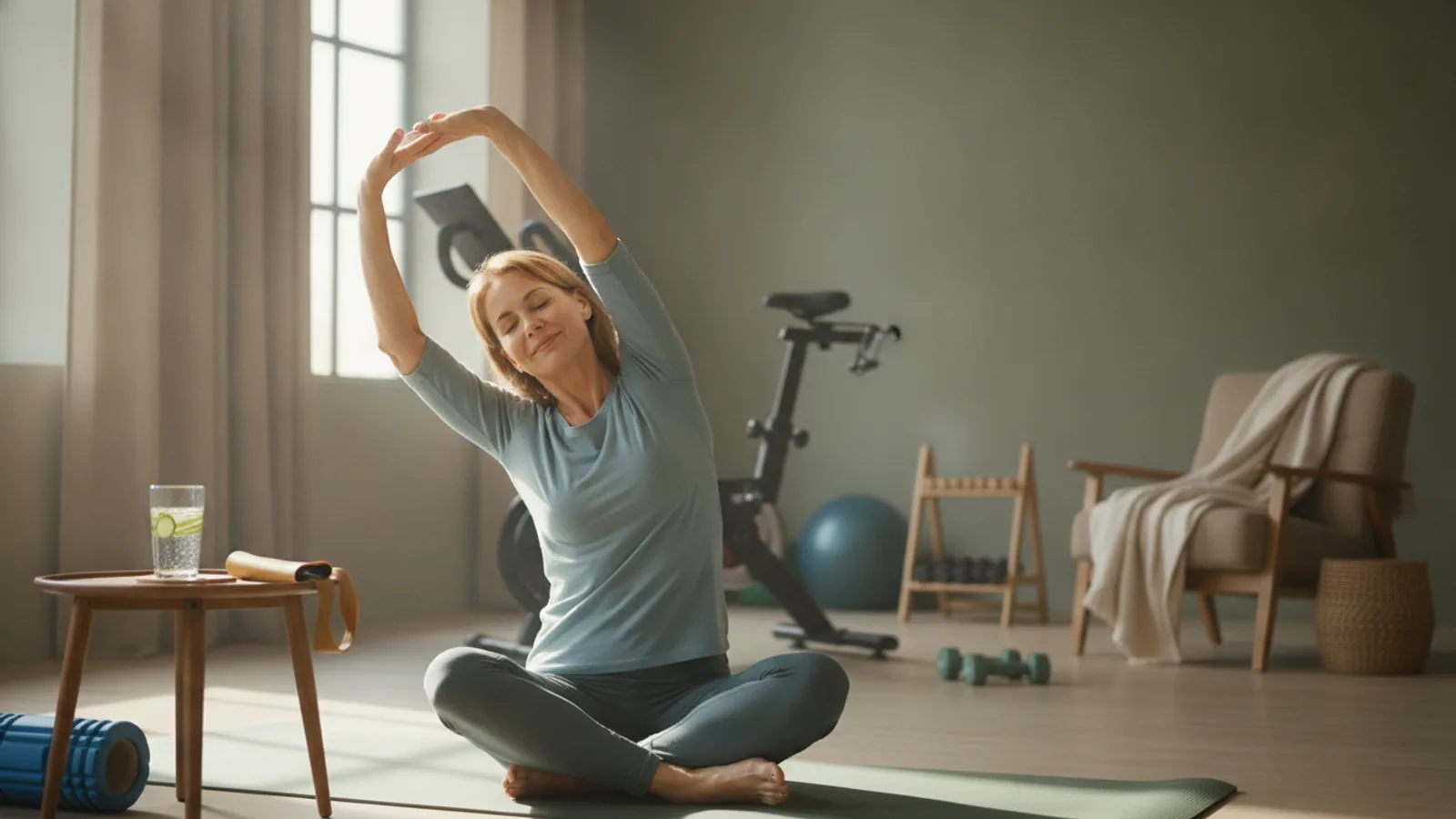
- Choose a safe, clutter-free space with a non-slip area, and keep water, a chair for support, and a mat within reach.
- Set a consistent time for your routine, preferably at a time when you feel energetic and less rushed.
- Collect comfortable clothing, supportive shoes, and any light equipment like a towel or small water bottle for resistance.
Step-by-Step Instructions
Assess Your Starting Point and Set a Baseline
Begin by reflecting on your current activity levels, how you feel during daily tasks, and any areas of stiffness or pain. Write down your typical energy, sleep, and mood. Then choose a simple test, like sitting down and standing up from a chair without using hands, and note how many times you can do it in 30 seconds. This gives a concrete baseline to monitor progress. Check your resting heart rate in the morning. If you feel pain during any part, modify or skip that movement. This assessment matters because it tells you what you can safely handle; starting too hard could cause injury or discourage you. By having a baseline, you can later adjust your routine with evidence, not guesswork, and you'll recognize improvement more easily.
Design a Gentle Warm-Up to Prepare Your Body
Spend five minutes performing slow, controlled movements that gradually increase blood flow and loosen joints. Start with walking in place, making big arm circles backward, and then do gentle shoulder rolls and hip rolls. Progress to bending forward from the hips with a flat back, letting your hands slide down your legs until you feel a mild stretch. Then perform a few calf raises while holding a chair for balance. Each movement should be fluid and comfortable, not forcing a stretch. After this warm-up, your heart rate may rise slightly, but you should still be able to talk normally. Check that your shoulders are not hunched and your breathing is relaxed. This warm-up is crucial because it raises tissue temperature, making muscles and joints more pliable and reducing the risk of pulling something during the stronger exercises that follow.
Perform Low-Impact Mobility and Core Stabilization Work
For the next ten minutes, focus on moving your joints through their full range of motion without pain. Include spine twists while sitting or standing, knee-to-chest pulls lying down, and ankle rotations. Then, for core stability, do a modified plank on your hands and knees (or hands on a countertop) for 20 seconds, tightening your belly. Add bird-dog exercises: from all fours, lift your right arm and left leg, hold for 3 seconds, then lower and switch. Keep your back flat and neck neutral. Check that you can maintain a stable position without your lower back arching. This work is important because mobility maintains joint health, and a strong core protects your spine during daily actions, ensuring you stay injury-free. It also enhances balance, reducing falls. If you feel unsteady, perform the movements near a wall or chair.
Add Gentle Strength Training with Bodyweight or Light Resistance
Spend another ten minutes on strength exercises that target major muscle groups: squats (sit back as if into a chair, but only as deep as comfortable), wall push-ups (place hands on a wall at chest height, bend elbows, and lean in), and seated rows using a resistance band or a towel looped around a doorknob. Perform 8-12 repetitions of each, resting at least 30 seconds between exercises. Check that your knees do not cave inward during squats and that your shoulders stay away from your ears. Strength training builds muscle mass, which naturally declines in midlife, and boosts your metabolism, helping you maintain a healthy weight and bone density. This prevents frailty and keeps you independent. Choose a resistance level where you can complete the repetitions with moderate effort but still speak in short sentences.
Incorporate Balance and Flexibility Exercises
Dedicate five minutes to balance and flexibility. Stand near a sturdy chair and practice standing on one foot, holding the chair if needed, for 30 seconds per side. Then do a standing hamstring stretch: place one heel on a low step or chair, keep your leg straight, and lean forward gently. Also stretch your calf by pushing a wall. Finally, do a chest and shoulder stretch by clasping your hands behind your back and straightening your arms. Hold each stretch for about 20 seconds without bouncing. Check that you can maintain your balance without holding your breath. This combination is crucial because balance naturally declines with age, and improving it prevents falls, which are a major risk. Flexibility keeps joints fluid, reduces stiffness, and improves your range of motion, making daily tasks easier.
Cool Down, Breathe, and Acknowledge Your Body
Finish with a two-minute cool-down to gradually lower your heart rate and relax. Sit quietly and take slow, deep breaths, exhaling longer than inhaling. Then do gentle neck stretches: slowly tilt your ear to your shoulder and hold for 15 seconds. End with a self-check on how you feel: rate your energy, any pain, and your mood on a scale of 1-10. Write this down. This cool-down is important because it signals your body to return to rest, preventing dizziness. It also gives you a moment to appreciate the movement you did, reinforcing a positive habit. By acknowledging your effort, you build self-confidence and motivation for the next session. Remember, consistency matters more than intensity; even a short routine counts.
Quick Reference
| Situation | Action | Why it helps |
|---|---|---|
| You feel a sharp knee pain during squats. | Stop squats and switch to a supported chair sit-to-stand, or do wall sits instead. Use a chair for balance and shorten your range of motion. | Sharp pain may indicate joint strain; modifying protects the knee and keeps you active without worsening injury. |
| You are short on time and can't do the full 30-minute routine. | Do a 10-minute baseline: 2 minutes warm-up, 5 minutes mobility and strength, 2 minutes cool-down. Choose exercises you know. | Even a short session helps maintain habit and circulation, and it avoids the all-or-nothing trap that leads to skipping. |
| You feel dizzy when doing the standing balance exercise. | Perform the balance exercise seated, or hold onto the chair with both hands. Lower the challenge and continue slowly. | Dizziness can signal blood pressure changes; modifying ensures safety and allow you to build balance gradually. |
Common Issues
- Low back pain during planks or bird-dog: Tighten your belly and keep your back flat. Try the plank on an elevated surface like a counter or bench. Reduce hold time and lift legs less high.
- Wrist pain in push-ups or all fours: Use dumbbells to hold onto during plank, or make fists and support on your knuckles. You can also do exercises on your forearms or use a wall.
- Feeling too tired to exercise: Start with a 'micro-session' of 5 minutes of gentle movement and decide after. Often once you start, you'll continue, but stopping is okay.
Advanced Tips
- Use 'traffic light' self-monitoring: green for comfortable, yellow for moderate effort, red for stop. Aim to stay in yellow most of the time.
- Incorporate 'incidental movement' by taking stairs, walking during phone calls, and parking further away to add activity without formal time.
- Try 'prehab' exercises for common problem areas like knees and shoulders, such as leg raises and shoulder blade squeezes, to prevent issues.
Final Checklist
- I have cleared my exercise plan with a healthcare professional.
- I have a safe, uncluttered space and the necessary equipment (mat, chair, water).
- I have scheduled a specific time for my routine on at least 3 days this week.
- I will start with a gentle 15-minute version, aiming to gradually increase by 5 minutes per week as tolerated.
FAQ
How often should I do this routine?
Begin with 3 days per week, with at least one rest day between sessions. If you feel good, you can increase to 4 or 5 days, but always take one full rest day. Consistency is more important than frequency; even 2 times a week has benefits. Listen to your body—fatigue or increased pain means you need more rest.
Can I do this routine if I have arthritis?
Yes, gentle movement often helps arthritis symptoms, but you should check with your doctor. Focus on joint-friendly exercises like swimming or seated routines. Avoid movements that cause sharp pain. The key is to move within a pain-free range, and you may need to modify or skip exercises on high-pain days. Start with very low intensity, and stop if symptoms worsen.
What if I miss a session?
Missing one session is not a big deal; just resume your planned schedule. Do not double up the next day. If you find you are constantly missing sessions, reassess your time and reduce the length or frequency. It's better to do 10 minutes consistently than 30 minutes once a week. Remember, this is about building a sustainable habit.