How To Choose A Simple Hydration Habit For Busy Working Days
A practical step-by-step guide to how to choose a simple hydration habit for busy working days, including preparation, instructions, common issues, tips, and next steps.
How To Choose A Simple Hydration Habit For Busy Working Days
Choosing a simple hydration habit for busy working days is about creating a low-friction routine that fits your schedule and environment. Instead of relying on willpower, you can use visual cues, a refillable container, and regular checkpoints to ensure you drink enough water without disrupting your workflow. This guide helps you establish a practical habit that supports focus and energy.
Fast Answer
- Keep a refillable water bottle on your desk at all times, and refill it every morning and after lunch.
- Set a gentle reminder on your phone or computer every hour to take three sips of water.
Before You Start
- Choose a reusable water bottle that you find easy to carry and clean, with a capacity that suits your daily refill routine.
- Decide on a specific spot on your desk or in your bag where the bottle will always live when you are working.
- Before your workday starts, fill the bottle completely and place it in that designated spot.
- Set up a simple reminder system on your phone or calendar that repeats every hour during your working hours.
Step-by-Step Instructions
Pick a Visible Container
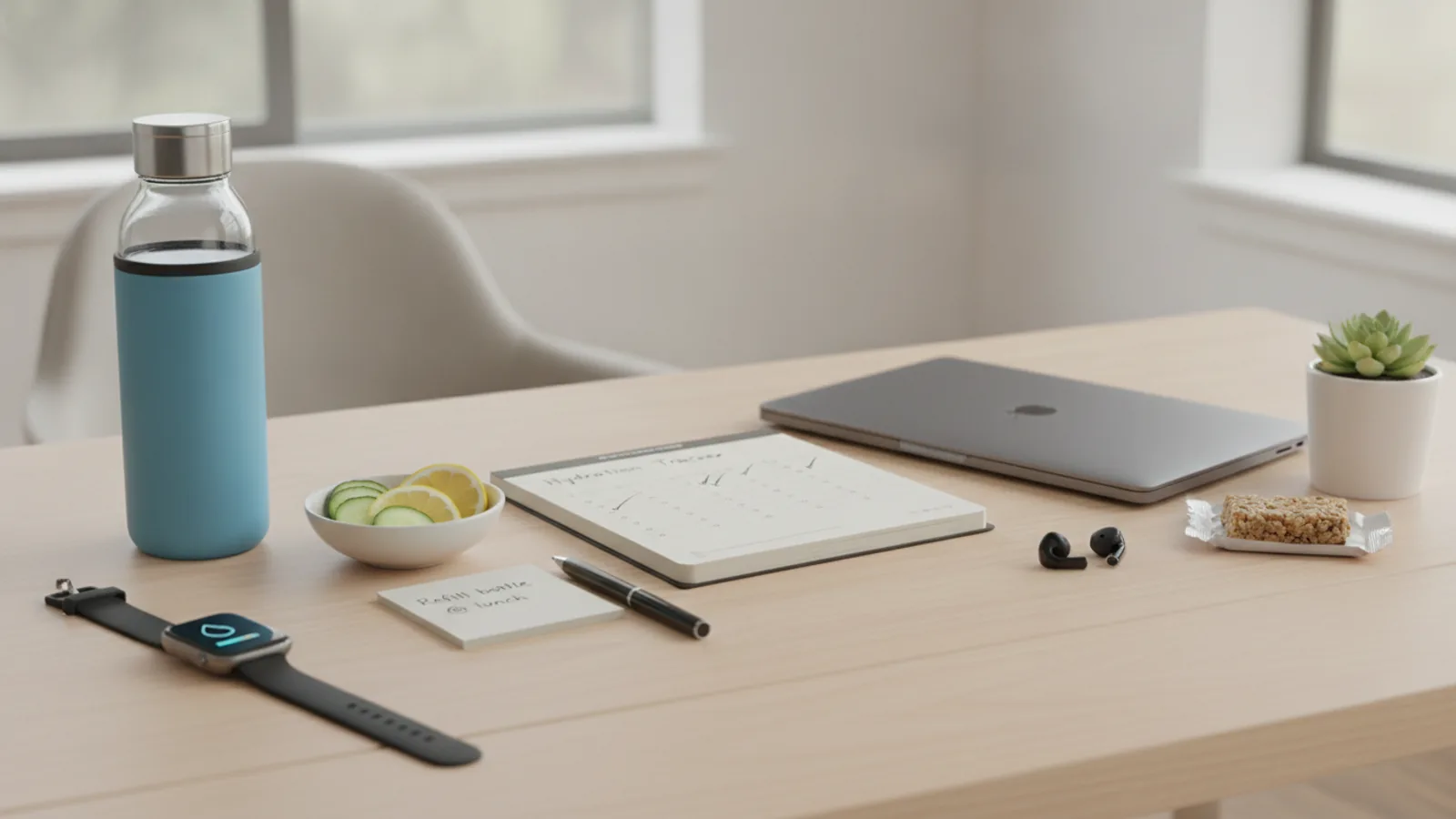
Your first action is to select a refillable water bottle or a large glass that is easy to see and reach while you work. Place it on your desk, not tucked in a drawer or bag. Keep it filled with fresh water from the start of your day. A visible container serves as a subtle cue that reminds you to take a sip regularly. When the bottle is within your line of sight, you are more likely to drink without having to think about it. This works because our brains are wired to respond to visual prompts, and a recurring image of your bottle can trigger automatic behavior. Even if you forget once, the sight of the bottle will eventually draw your attention. Make sure it is easy to clean and not prone to spills, because if it is a hassle to use, you will avoid it. Choose a size that feels comfortable to carry, but not so large that it feels heavy on your desk. A simple, uncluttered design helps you focus on the habit rather than the object itself. You do not need a special bottle; any clean container will work. The key is that it is always there, waiting for you to take a sip.
Link It to an Existing Routine
Attach your water-drinking habit to something you already do every workday, such as checking your email, starting your computer, or having your lunch. For example, every time you sit down to start work, take three sips of water. When you get up to take a break, drink a few more sips. This method uses the power of habit stacking, where a new behavior is paired with an established one, making it easier to remember. The existing action serves as a reliable trigger, and over time, the water intake becomes automatic. This approach works because your brain already has a strong connection to the anchor activity, so you do not have to rely on memory or willpower. It is especially effective if you choose an anchor that happens several times a day, like responding to messages or moving to another task. You can even set a rule: before you open a meeting, take a sip. The important thing is to be consistent and not skip the paired behavior. If you miss once, do not worry; simply resume at the next anchor. Over time, this linking will make hydration a natural part of your workflow, requiring minimal extra effort.
Set a Gentle Timer
Use a gentle reminder system, such as a calendar alert or a standalone timer, to nudge you every hour to take a few sips of water. The reminder should be subtle and not intrusive, like a soft chime or a notification that you can dismiss quickly. When the reminder rings, take at least three sips or enough to feel a small amount of water in your throat. This action takes less than a minute, so it will not disrupt your flow. The reason this is effective is that it breaks the long stretch of time when you might forget to drink. Sometimes, even with a visible bottle, you can become so absorbed in work that you ignore it. A timer acts as an external check that catches you before dehydration sets in. It also helps you develop a rhythm, as your body gets used to the regular intake. Adjust the frequency if you find it too often or too rare; the goal is to create a gentle nudge, not a stressor. Many people find that after a few weeks, they no longer need the timer because the habit becomes automatic, but the timer is there in the meantime to build the routine.
Refill at Fixed Points
Decide on two or three fixed points during your workday when you will refill your water bottle, regardless of how much you have drunk. For example, refill it once in the morning after your first break, once around lunch, and once in the afternoon. These refill sessions act as a fresh start and give you a chance to reassess your progress. When you refill, fill the bottle completely, and then make a point to take a sip right away. This habit ensures that you always have a full supply available, so you never face the dilemma of an empty bottle when you are busy. It also breaks up your day with a brief moment of physical activity, which can help reduce eye strain and muscle tension. The reason this works is that it sets a clear schedule for hydration, making it a planned activity rather than an afterthought. You can tie these refills to other events, like ending a meeting or completing a task, to make them easier to remember. Over time, these fixed points become habitual, and you will find yourself automatically reaching for the bottle to refill at those times.
Use Visual or Digital Cues
Create an obvious visual cue that helps you track your water intake, such as marking your bottle with lines that indicate time goals, or placing a small sticky note on your monitor with a checkmark each time you finish a bottle. Alternatively, you can use a simple timer app that tracks your sips. The goal is to make your progress visible, because when you can see that you have drunk half a bottle by midday, you are more likely to continue. You might also notice if you are falling behind and can adjust by taking larger sips. This approach taps into the brain's reward system: seeing a completed mark can give you a small sense of accomplishment. It also makes hydration a concrete goal rather than an abstract idea. You do not need to be elaborate; a simple tally on a piece of paper works. The key is that the cue is immediately visible and does not require extra effort to check. By focusing on the visual, you are less likely to forget or skip your drinks. This method is particularly helpful for people who are visual thinkers or who enjoy tracking progress.
Adjust and Personalize
After a few days, evaluate how your new hydration habit is working and make adjustments to fit your lifestyle. If you find that you are still not drinking enough, try a larger bottle or set more frequent reminders. If you are drinking too much and making too many trips to the restroom, you can reduce the frequency slightly. Everyone has different hydration needs depending on their body, activity level, and environment, so it is important to listen to your body and adapt. The goal is not to hit a specific number, but to maintain a steady level of comfort and energy. You might also adjust the timing of your refills to better match your work breaks. For instance, if your afternoons are busier, you might front-load your intake in the morning. The process of personalizing makes the habit sustainable because it fits your unique routine. Remember, the best habit is the one you can keep up without feeling deprived. So, be flexible and make changes that make it easier, not harder, to stay hydrated.
Quick Reference
| Situation | Action | Why it helps |
|---|---|---|
| You are in a long meeting with no breaks. | Keep your water bottle on the table in front of you and take small sips during pauses or when listening to others. | This keeps you hydrated without disrupting your participation, and the bottle serves as a visual cue. |
| You have to rush from one task to another. | Set a rule to take three sips every time you transition from one task or email to the next. | These transitions happen frequently, so each small sip adds up to a healthy amount by the end of the day. |
| You are glued to your screen and forget to drink. | Use full-screen reminders or place your bottle directly in front of your keyboard so that you touch it often. | The physical obstruction forces you to move it, and that touch reminds you to take a sip. |
Common Issues
- You keep forgetting to use your water bottle.: Move the bottle to a spot you look at frequently, like between you and your monitor, and set a phone alarm that goes off when you usually forget.
- The taste of water is boring and you reach for soft drinks.: Add a slice of lemon, cucumber, or a splash of fruit juice to your water, and keep a jug of flavored water on your desk as a tasty alternative.
- You drink a lot but still feel tired.: Check if you are getting too much caffeine, which can dehydrate you; balance your water with a small reduction in coffee or tea.
Advanced Tips
- Try drinking from a straw, as some people find they take larger sips and drink more overall.
- Set a daily step goal for water, such as finishing three bottles, and reward yourself with a short break after meeting it.
- During intense focus periods, keep your bottle within arm's reach and sip between breaths, without breaking your concentration.
Final Checklist
- Have a designated water bottle or glass that is visible and filled at the start of each day.
- Link your water drinking to at least two existing daily work habits.
- Set a gentle reminder every hour to take three sips.
- Regularly evaluate and adjust your hydration plan based on your energy and comfort.
FAQ
How much water should I drink in a working day?
A common guideline is to drink six to eight glasses, but your actual need depends on your body size, activity level, and your environment. Start with a simple target of three refills of a typical bottle and adjust based on how you feel, your urine color, and your thirst.
What if I don't like plain water?
You can naturally flavor water with a slice of lemon, cucumber, mint, or a small amount of fruit juice. You can also try sparkling water, as long as you monitor sugar and caffeine content. The goal is to stay hydrated, so any water-based beverage works.
Will drinking more water make me use the restroom too often?
In the first few days, you may notice more frequent bathroom visits, but your body usually adjusts. To minimize disruption, spread your intake evenly throughout the day and avoid chugging large amounts at once. If it persists, reduce your intake slightly and check with a health professional if you have concerns.