How To Choose A Cautious Supplement Label Check Before Buying
A practical step-by-step guide to how to choose a cautious supplement-label check before buying, including preparation, instructions, common issues, tips, and next steps.
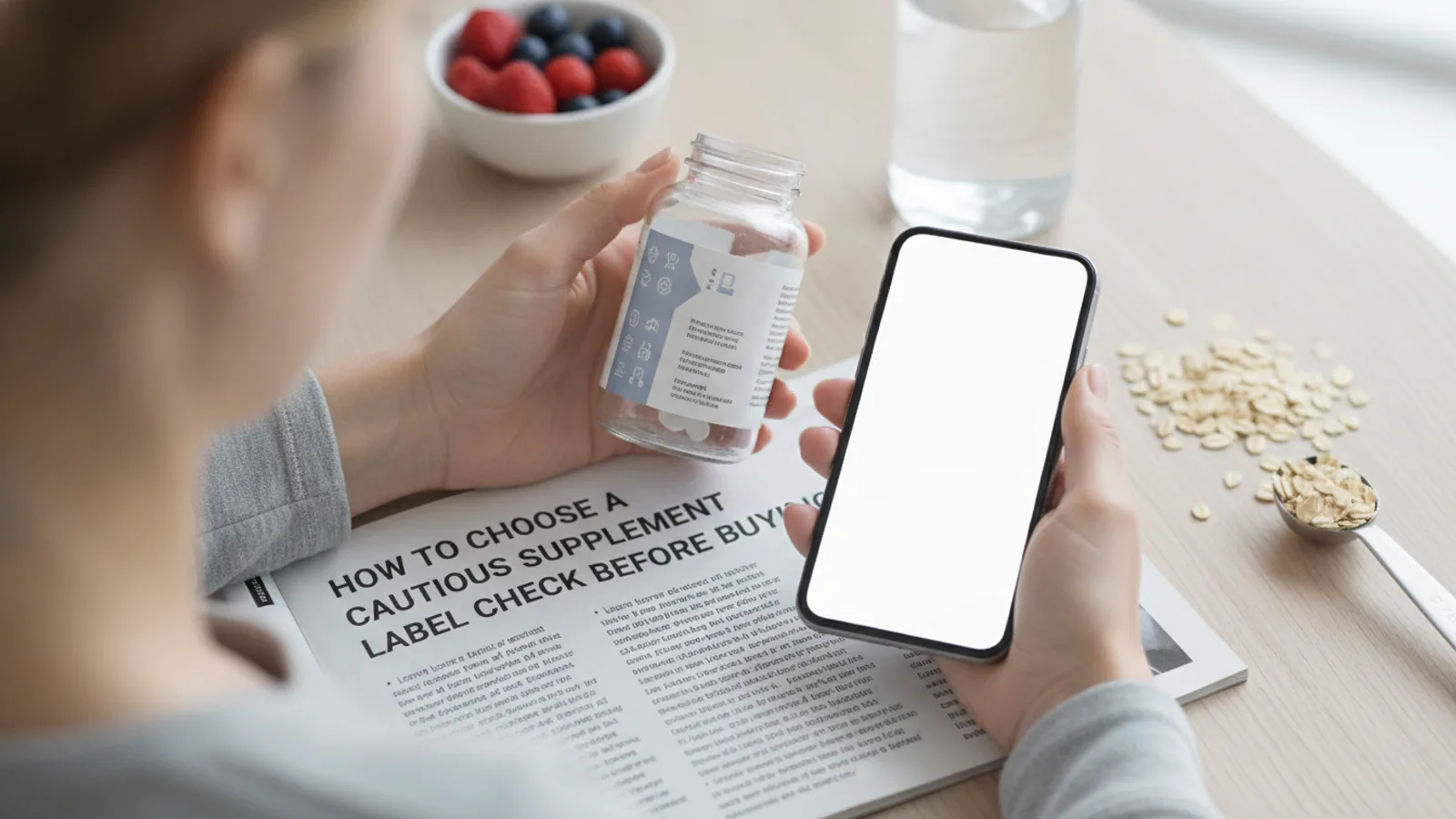
How To Choose A Cautious Supplement Label Check Before Buying
Choosing a supplement wisely requires a careful review of the label before you buy. This guide walks you through a step-by-step label-check process, from verifying serving size and active ingredients to understanding the Supplement Facts panel, recognizing red-flag wording, and confirming third-party testing. You'll learn how to spot misleading claims, avoid unnecessary additives, and select a product that matches your needs. By the end, you'll have a practical checklist to use in the store or online, helping you make an informed choice that supports your health goals without falling for marketing hype.
Fast Answer
- Always read the Supplement Facts panel first: check the serving size, the amount of each active ingredient, and the percent daily value if listed.
- Look for a third-party certification seal (like NSF or USP) on the label, which indicates that the product was tested for quality and purity.
Before You Start
- Have a clear idea of the specific nutrient or botanical you want, along with the dosage range recommended by a healthcare professional.
- Take a few minutes to research the supplement form (pill, powder, gummy) and whether your body absorbs it well.
- Gather any relevant health information, such as allergies or medications, to help you avoid harmful interactions.
- Set a realistic expectation that the label will not tell you everything: you may need to visit the manufacturer's website or contact them for extra details.
Step-by-Step Instructions
Identify Your Supplement Purpose
Before you look at any label, decide exactly why you want to take a supplement. Are you trying to fill a specific nutrient gap, support a health goal like better sleep, or address a deficiency shown by a blood test? Write down the main ingredient and the amount you intend to take, ideally based on advice from a doctor or dietitian. This step matters because it gives you a clear benchmark for evaluating the label. If you don't know what you need, you risk picking a product with the wrong ingredient or an unnecessary mega-dose. Take a moment to list your desired nutrient, your target daily amount, and any other criteria (like vegetarian or allergy-friendly). With that in mind, you can move to the next step with a specific goal in hand, making the label check faster and more accurate.
Scan the Front Label with a Critical Eye
The front of the bottle is marketing territory, but it can still give you useful clues. Look for the official 'Supplement Facts' panel somewhere on the label—that is the legally required part. Notice the structure: it lists the serving size, servings per container, amount per serving, and percent daily value (%DV) for nutrients that have one. Don't be fooled by front-of-package buzzwords like 'high potency' or 'rapid release' because those are not standardized. Instead, use the front to identify the main ingredient and the form (like magnesium citrate versus oxide). Also, look for a third-party seal such as NSF, USP, or ConsumerLab, which tells you that an outside lab verified the product's contents. This step matters because a reputable manufacturer will usually display its testing proudly, so its absence is a warning.
Read the Supplement Facts Panel in Full
Now, turn the bottle to the back and read the Supplement Facts panel carefully. First, note the serving size and how many servings are in the container. Then look for the list of ingredients and the amount of each per serving. Pay special attention to the %DV column: if a nutrient has an established daily value, the %DV tells you what one serving contributes to your daily needs. For example, if a vitamin C supplement has 500 mg and the DV is 90 mg, that would be 556% DV, which is not necessarily a problem but shows it’s a high dose. Check for two things: the exact form of each ingredient (e.g., 'magnesium oxide' vs. 'magnesium glycinate') and whether there are any proprietary blends that hide individual amounts—these are often listed as a single 'total' without per-ingredient breakdowns, which is a red flag. This step matters because the panel is your only direct source for transparency about what you're actually consuming.
Scrutinize the Ingredient List for Additives
After you've examined the active ingredients, turn to the 'Other Ingredients' section, which lists inactive components like fillers, binders, artificial colors, and preservatives. Look for anything you might be allergic to, such as soy, gluten, or a specific oil. Also, be cautious about artificial colors, sweeteners, and unnecessary coatings. Some additives are harmless, but a long list of chemicals may indicate a lower-quality product. You also want to check for common allergens like milk, eggs, fish, shellfish, tree nuts, peanuts, wheat, and soy. If the label says 'manufactured in a facility that processes...' take that seriously if you have severe allergies. This step matters because inactive ingredients can cause side effects or interact with medications, even if they are not the primary purpose of the supplement.
Check for Red Flags in Claims and Wording
Inspect the label for any words that suggest quick fixes, miracle cures, or unsubstantiated promises. Phrases like 'cures disease,' 'melts fat,' 'overnight results,' or 'no side effects' are not legal for dietary supplements to claim, so their presence is a huge warning. Also, be wary of terms like 'doctor recommended' without naming the doctor, or 'clinical strength' without clinical evidence. Look for the disclaimer that says 'This statement has not been evaluated by the Food and Drug Administration. This product is not intended to diagnose, treat, cure, or prevent any disease.' That disclaimer is required by law, but its presence doesn't mean the product is safe—it just means the company is following the rules. This step matters because unscrupulous manufacturers use vague language to imply effectiveness without scientific proof, and you need to protect your health.
Verify the Product's Quality and Source
Finally, look for any signs that the product was manufactured under good practices and tested for purity. Look for a lot number and an expiration date—their presence indicates a professional production process. Check the manufacturer's contact information: a responsible company will provide an address and a customer service phone number or website. If possible, visit the manufacturer's website and look for certificates of analysis (COAs) for the product, which show independent test results for identity, strength, and purity. Some companies list these PDFs for each batch. If you cannot find such information, consider that a red flag. This step matters because a supplement can be contaminated or contain less of the ingredient than claimed, and third-party testing is the only way to verify what's in the bottle.
Quick Reference
| Situation | Action | Why it helps |
|---|---|---|
| The front label says 'clinically proven' but the Supplement Facts panel has a proprietary blend. | Put the bottle back and find a product that lists individual amounts for each ingredient in the blend. | A proprietary blend can hide the actual doses of active components, making it impossible for you to judge if the 'clinical' claim is supported by the amounts you're getting. |
| You see a third-party seal like NSF or USP on the label. | Look up the seal on the certifier's website to verify the brand is currently certified for that specific product. | Seals can be misused or expired, so verifying directly with the certifier ensures that the product actually meets the testing standards. |
| The label lists 'magnesium oxide' as the sole magnesium source, but you expected a highly absorbable form. | Choose a product with a more bioavailable form like magnesium citrate or glycinate, or consult your doctor to see if oxide is sufficient for your needs. | The mineral form affects absorption; oxide is cheaper but less absorbable, which may lower the actual amount your body gets. |
Common Issues
- The serving size on the label is two pills, but you thought you'd only need one.: Always calculate the total amount of each ingredient per day based on your intended serving, and adjust the serving size accordingly, but never exceed the recommended amount on the label without a doctor's approval.
- You find a supplement that includes many herbs and vitamins in one pill, and you're not sure if they all are necessary.: Check for potential interactions between the ingredients, and if you're taking other medications, ask your pharmacist to review the combination list before you buy.
- You notice the expiration date is less than six months away.: Choose a product with a longer shelf life, especially if you don't plan to use it daily, because expired supplements can lose potency and become ineffective.
Advanced Tips
- Compare the 'amount per serving' with the 'servings per container' to figure out the cost per dose, but remember that the cheapest option may not be the best quality.
- Look for the term 'standardized' on the label if you're buying an herbal extract—this indicates that the active compounds are present in consistent quantities.
- If you're taking multiple supplements, check for overlapping ingredients to avoid exceeding safe upper limits, especially for fat-soluble vitamins.
Final Checklist
- I have identified the specific ingredient and dosage I need, based on advice from a healthcare professional.
- I have read the entire Supplement Facts panel and know the serving size, amount per serving, and %DV for each ingredient.
- I have checked the 'Other Ingredients' list for any allergens or additives I want to avoid.
- I have verified that the product has a clear expiration date, a lot number, and a reputable manufacturer with available quality-testing information.
FAQ
What does 'percent daily value' (%DV) mean on a supplement label?
The %DV tells you what percentage of the recommended daily intake for a nutrient is provided by one serving of the supplement, based on a standard 2,000-calorie diet. For vitamins and minerals, a %DV of 20% or more is considered high. However, for nutrients without an established DV, you'll see a dash or an asterisk, meaning the label doesn't give a specific percentage. Use %DV to gauge if a serving provides a significant amount, but always compare it to your personal needs.
Are third-party seals like NSF or USP necessary?
Third-party seals are not required, but they add confidence because they mean an independent organization tested the product for identity, purity, and potency. This testing can help ensure that the supplement contains what the label says and is free from harmful contaminants. If a product has no seal, it doesn't necessarily mean it's low quality, but you may need to do more research on the manufacturer's reputation and testing practices.
Can I trust the phrase 'all-natural' on a supplement label?
The term 'all-natural' is not strictly regulated in the dietary supplement industry, so it can be used loosely. It does not guarantee that the product is free from synthetic ingredients or that it's safe. Always check the Supplement Facts panel and the 'Other Ingredients' list to see what is actually in the product. Natural ingredients can still cause side effects or interact with medications, so use the same critical evaluation as you would for any supplement.