Common Mistakes When Planning A Simple Hydration Habit For Busy Working Days
A practical step-by-step guide to common mistakes when planning a simple hydration habit for busy working days, including preparation, instructions, common issues, tips, and next steps.
Common Mistakes When Planning A Simple Hydration Habit For Busy Working Days
Planning a simple hydration habit for busy working days often fails because people aim for unrealistic targets, forget to build cues, or rely on memory alone. This guide walks through six common mistakes and provides practical, step-by-step fixes to help you create a sustainable routine that fits your actual schedule. You’ll learn how to set a base amount, anchor hydration to existing habits, use visual reminders, and adjust for activity level without feeling overwhelmed.
Fast Answer
- Start by determining a baseline water amount that fits your typical day, then add small, consistent actions like drinking a glass after each bathroom break.
- Link your hydration to routine anchors, such as drinking water when you first sit down at your desk or after each email batch, to make it automatic.
Before You Start
- Choose a reusable water bottle with clear volume markings so you can track how much you drink without guessing.
- Identify three consistent points in your workday (for example, after your morning meeting, after lunch, and after a mid-afternoon task) to link with drinking water.
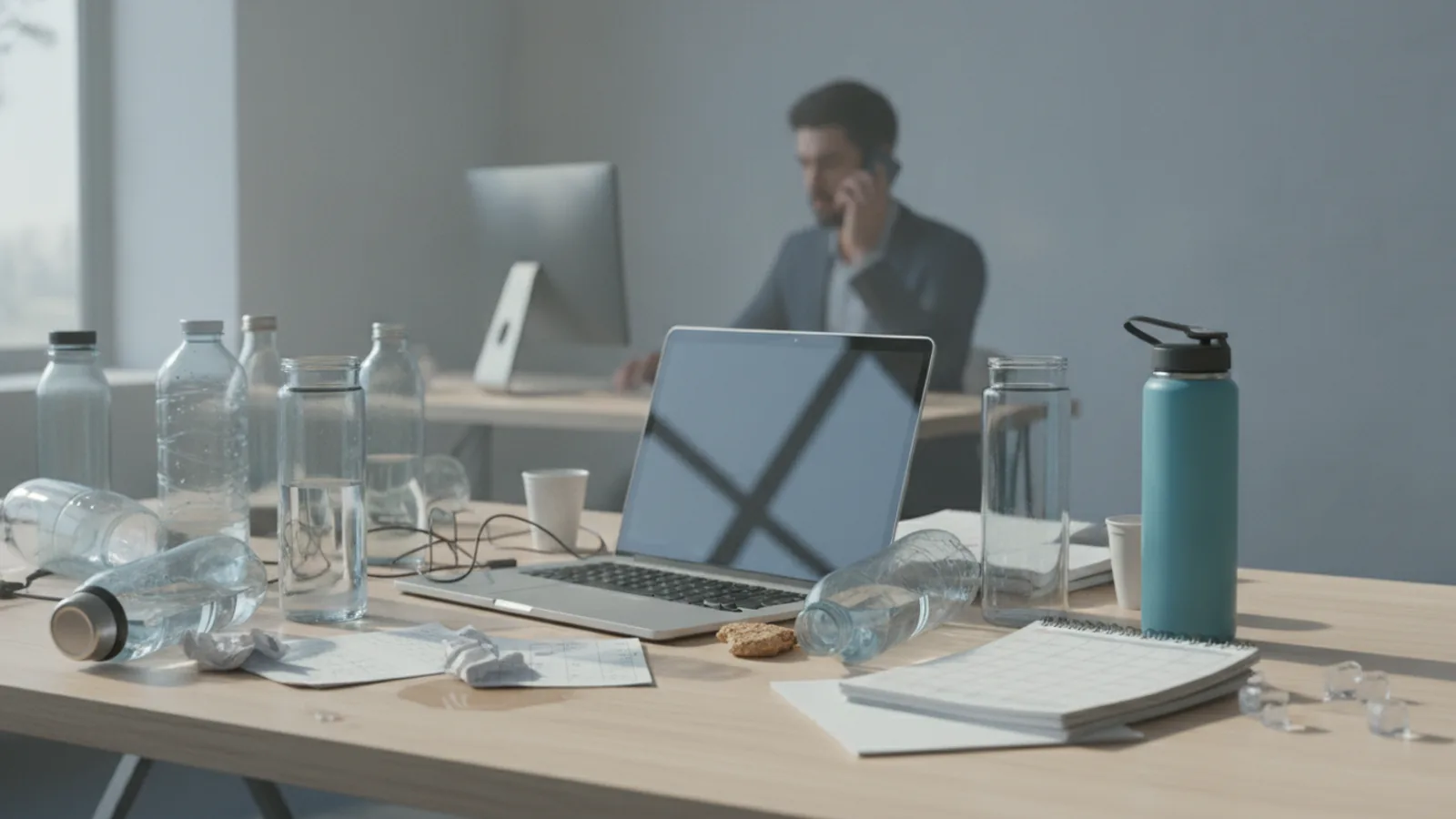
- Clear a visible spot on your desk for the water bottle to serve as a constant visual cue.
- Decide on a simple daily goal that feels small and achievable, such as finishing one full bottle by lunch and another by 4 PM.
Step-by-Step Instructions
Choose a Realistic Daily Water Goal
Many people plan to drink eight glasses a day without considering their actual thirst, activity, or work schedule. That fixed number often feels too high, so you skip it entirely. A better approach is to set a goal based on your normal routine. For example, aim to finish one 500-milliliter bottle by early afternoon, and another by the end of the workday. To figure your starting point, fill your bottle and refill it when you naturally reach for a drink. Count your typical refills for two days to see your baseline, then set a goal that is just one extra refill above that. For instance, if you usually fill twice, aim for three. This small, personalized goal feels doable and helps you build a consistent habit without pressure. After you meet it for five consecutive workdays, add another half-bottle or one extra refill. Remember to adjust on days when you exercise or are out in hot weather, as your needs increase.
Anchor Hydration to Existing Work Rituals
Trying to remember to drink water throughout the day often fails because your mind is busy with work tasks. Instead, link drinking water to habits you already do automatically. For example, drink a few sips right after you sit down at your desk in the morning, after you finish a phone call, or when you check your calendar for the next meeting. Choose two or three anchors that happen at least a few times each day. The key is to make the anchor specific and consistent. If you pick 'after every email response,' you might get too many prompts, but 'after every hour of focused work' works better. To set this up, identify a common action that occurs at least four times per day, such as standing up to stretch, walking to the printer, or opening a notebook. Then, keep your water bottle in a visible spot so that when you finish the anchor action, you see the bottle and take a sip. Over a few days, this connection becomes automatic, and you will drink water without thinking.
Use Visual and Physical Cues Correctly
A common planning mistake is to rely on reminders on a phone or watch, which you might ignore or dismiss because they appear at inconvenient times. A more effective cue is physical and always in your sight. Place an open water bottle on your desk, not in a bag or drawer, so your eyes see it constantly. If you get absorbed in work, the sight of water nudges you to take a sip. Another useful technique is to use a reusable bottle with a built-in time marker or to draw lines on the bottle to show target levels for specific hours. For example, mark a line for 9 AM, 11 AM, and 2 PM. By the time you reach each hour, you should have consumed water down to that line. This turns hydration into a visual game. Additionally, keep a small glass or cup next to the bottle and fill it at each anchor moment. This gives you a clear, small action that feels manageable. The goal is to make drinking water visible and almost automatic.
Schedule a Lunchtime Top-Up and Afternoon Reset
Many workers start the day well but forget to drink during lunch and then feel too tired in the afternoon. A simple fix is to build two dedicated hydration windows. Before you eat lunch, empty your water bottle and refill it fresh. This forces you to finish your morning target and start the afternoon with a clean slate. After lunch, take a short break and drink one full glass of water before resuming work. This helps combat the mid-afternoon dip in energy. To make this happen, set a personal rule: you cannot start lunch until your bottle is empty. If it isn’t, drink it down quickly. Similarly, after your lunch break, fill your bottle and place it on your desk, then drink one glass immediately. This ensures you have a new goal for the afternoon. These two windows help you avoid the common pattern of forgetting to drink for several hours at a stretch.
Adjust Hydration for Activity and Environment
A rigid plan that does not adapt to a busy day can fail because your fluid needs change. If you walk to meetings, climb stairs, or work in a warm room, you lose more water. Planning for a fixed amount every day ignores these factors. Instead, learn to recognize signs of mild dehydration, such as a slight headache, dry lips, or fatigue. When you notice these, increase your intake temporarily. On days when you have a physically active task like moving boxes, standing for long periods, or walking outdoors, add an extra full glass of water for every thirty minutes of that activity. Also, consider the climate: in hot or dry conditions, you need more fluids. Keep a small notebook or digital note to record your refills for a few days so you can see patterns. If you drink more coffee or tea, add one extra glass of water for each caffeinated beverage, because caffeine acts as a mild diuretic for some people. The goal is to stay flexible and respond to your body’s cues.
Track Progress with a Simple Paper Chart
Many digital apps and gadgets can track water, but they may become another thing to maintain. A simple paper chart on your desk is surprisingly effective and requires no special tools. Create a grid for each workday with two columns: morning and afternoon. Each time you finish one full bottle, you draw a check mark in the appropriate column. This visual reminder helps you see your progress at a glance. For example, you might set a target of three bottles per day: one by 10 AM, one by 1 PM, and one by 4 PM. Mark each completion with a small sticker or a colored highlighter. If you miss a target, do not panic; just note it and try again the next hour. The chart helps you identify patterns, such as always forgetting after lunch. Review your chart at the end of the week and decide on one small adjustment for the following week. This low-tech method keeps you engaged without adding screen time.
Quick Reference
| Situation | Action | Why it helps |
|---|---|---|
| You realize you have gone most of the morning without drinking anything, and you feel a dull headache. | Immediately drink a full glass of water (about 250 ml) and then refill your bottle. Then, identify the anchor you missed, such as your mid-morning break, and set a visible cue on your desk to start again from the next anchor. | A headache is often an early sign of mild dehydration, so a quick rehydration helps relieve it. Re-anchoring to a specific routine prevents the rest of the day from becoming a lost cause. |
| You keep forgetting to drink because you are in back-to-back meetings for two hours. | Keep a small water bottle in your bag or pocket, and take three large sips during each meeting when you transition seats or when someone pauses. If you cannot drink in front of others, step out for a quick sip during a break. | Meeting-heavy schedules create long gaps without fluids, and a small, frequent sip pattern maintains hydration without disrupting the meeting flow. |
| You reach the late afternoon and realize you have not finished your morning bottle, let alone the afternoon target. | Drink half of your afternoon bottle immediately, then set a timer for every 30 minutes to finish the rest by the end of the workday. For the next day, move your morning target earlier and attach it to your first daily task. | This corrective action quickly catches you up and also highlights the timing mistake, prompting you to adjust your plan for the next day to avoid the same pattern. |
Common Issues
- You set a goal like eight glasses a day but never drink more than four, leading to guilt and giving up.: Replace the fixed number with a personalized goal based on your bottle volume and typical work schedule. For example, if your bottle holds 500 ml, aim to finish three bottles by 5 PM. Start with two and gradually increase. Track your baseline for two days to set a realistic starting point.
- You rely on your memory and end up forgetting to drink during busy periods, especially when you are chronically short on time.: Create multiple external cues that do not depend on willpower. Place your water bottle in a visible spot, set a watch alarm for every hour, or use a sticky note on your computer. Pair drinking with an existing habit like starting a new task or getting up to sit down.
- You drink a lot of coffee and soft drinks, assuming they replace water, but you still feel tired and have dry skin.: For every caffeinated or sugary drink you have, drink one extra glass of water. Also, reduce the size of caffeinated drinks if possible, and choose water as the main beverage during work hours. Monitor your energy and skin for a week to see if improvement occurs.
Advanced Tips
- Use a water bottle with a time-marked stripe that shows the target level for each hour, and set your work desk so the bottle is always between you and your keyboard, forcing you to move it aside to type.
- Create a 'hydration threshold' by weighing yourself before and after work on a few days; if you lose more than 1% of your weight, you need more fluid during the next day. Note: this requires a reliable scale and is usually accurate, not a guarantee.
- If plain water feels boring, add a few slices of cucumber, lemon, or a small ice cube from herbal tea to add flavor without sugar, but avoid flavored additives that contain artificial sweeteners.
Final Checklist
- I have a marked, transparent water bottle at my desk, and I know its total volume in milliliters or ounces.
- I have chosen three daily anchor points (for example, after starting work, after lunch, and after the last afternoon meeting) to automatically take a sip.
- I have a small paper chart or a digital note where I mark each refill, and I review it every Friday to spot patterns.
- I have adjusted my plan for days with heavy physical activity or hot office conditions, and I do not rely on fixed numbers alone.
FAQ
What if I drink too little and feel symptoms like dizziness or confusion during the workday?
Dizziness or confusion can be serious signs of dehydration, so stop work immediately and drink a glass of water. If symptoms persist, seek medical attention. Do not try to force large volumes at once; sip slowly. After recovery, reassess your hydration plan to include more frequent breaks. For safety, check with a doctor if these symptoms recur.
How can I remember to drink water when I am very focused on a complex task?
Use a timer that repeats every 30 minutes, and whenever it sounds, take a sip from your bottle. You can also set up a physical reminder: keep your water bottle in your hand while reading, and put it back on the left side of your desk. When you reach for it out of habit, you are reminded to drink. Make the cue non-intrusive but constant.
Is it okay to drink most of my water in the morning and less in the afternoon?
Yes, it is better to front-load your hydration earlier in the day to avoid frequent evening bathroom trips. Many people aim for 70% of their daily goal by 3 PM. This aligns with natural energy levels and reduces sleep disruption. Still, listen to your thirst and adjust if you exercise later in the day.